
Ah, yes, the joys of cleaning high, hard-to-reach windows. It’s a task that everyone loves to avoid, but unfortunately, it’s a necessary evil if you want to keep your windows looking sparkly clean.

However, this routine chore doesn’t have to be as difficult and time-consuming as it might seem. In fact, with a little practice, the job becomes easier. Now, I actually enjoy cleaning windows… while listening to a good podcast of course.
Can You Power Wash Windows?

High-power water jets work quickly and efficiently to remove dirt and debris from windows. Consequently, they can save you a lot of time and work. But should you use a pressure washer to clean your windows?
You can, but you want to take extra care when doing so, especially with wood framed windows. Simpson Cleaning recommends using a 40 degree nozzle, designed for softer surfaces. (And, if you don’t know what you’re doing, you may want to call in the pros.)
In addition, you don’t want to use a pressure washer while standing on a ladder. Instead, Simpson recommends using a second story nozzle kit.
Window Cleaning Tools for Tall Windows:
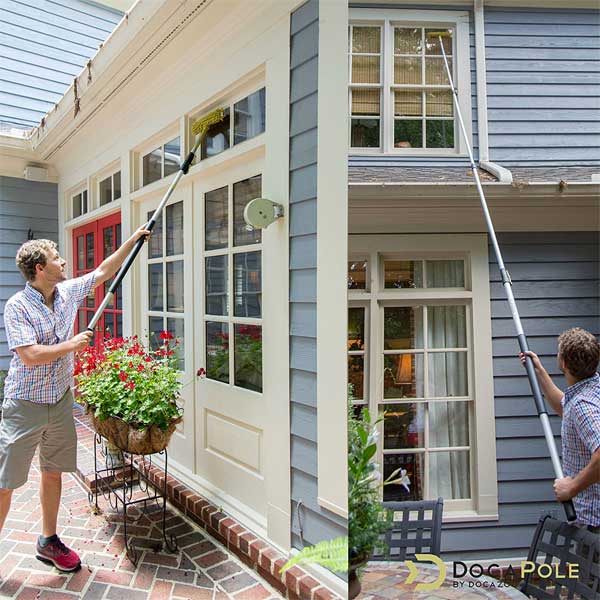
Note: If you’re working from a ladder or elevated platform, make sure it’s stable and secure. Not only is this safer (obviously), but it will enable you to work faster too.
Alternatively, you can stand on the ground and clean your upstairs windows using a Docapole.
When it comes to cleaning products, I suggest using a mixture of white vinegar and water. It’s cheap, non-toxic and cleans windows just as well as the poisonous cleaners.
There’s a certain method to cleaning windows without leaving streaks that is actually not difficult, complicated or expensive. In fact, you can use a cheap squeegee and microfiber scrubber tool that costs less than $20.
2 Steps to Cleaning Tall Windows:
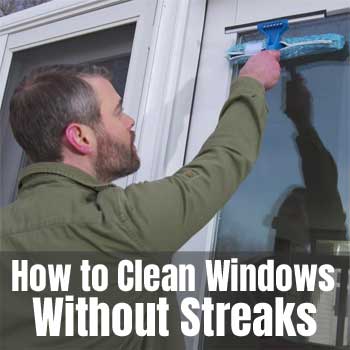
Essentially, you can break down your window washing job into 2 basic steps.
First, wash the dirt off of your windows. You can do this using the microfiber scrubber side of the window cleaning tool or a microfiber cloth. Microfiber works really well at both grabbing and lifting dirt off the surface of whatever you are cleaning.
Second, remove excess water using your squeegee. You want to make sure it’s clean, and replace the squeegee blade when needed to ensure maximal water removal. Replacement blades don’t cost much, and they can save you a lot of extra work.