
I’ve cleaned a lot of glass in my time—windows, mirrors, shower doors, windshields, you name it. And here’s the truth most people learn the hard way:
“Glass is glass” is the fastest way to end up with streaks, scratches, or a damaged coating.
Different types of glass (and coatings) react differently to chemicals, tools, and even your wipe pattern. The good news: you don’t need a shelf full of fancy sprays. You just need to match the right kind of cleaner to the type of glass and the kind of grime.
Let’s break it down in a practical way—with realistic expectations, trade-offs, and the few solutions that cover almost everything.
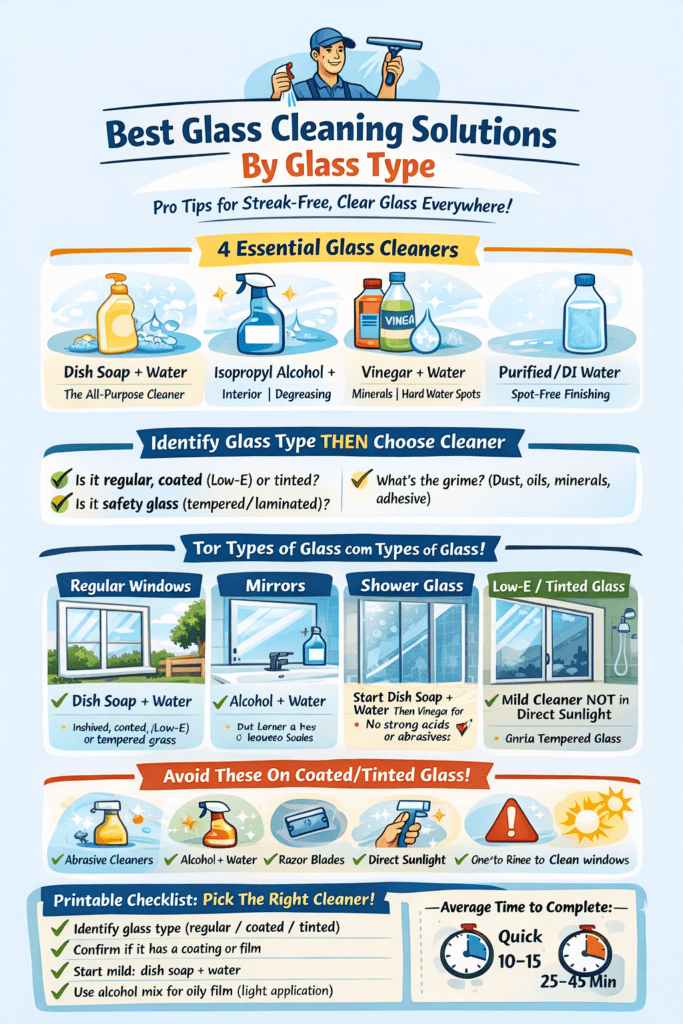
First: The 4 Cleaning Solutions That Solve 95% Of Glass Jobs
1) Mild Dish Soap + Water (The Workhorse)
Best for: everyday dirt, pollen, general film
Typical mix: a few drops in a bucket/spray bottle (don’t overdo it)
Why it works: it lifts dirt without leaving a heavy residue—especially when you finish with a squeegee.
2) Isopropyl Alcohol + Water (The Degreaser)
Best for: oily haze, fingerprints, interior car glass, kitchen glass
Alcohol flashes off fast and cuts film well (just don’t soak tinted film).

See a good example of an alcohol-based option (MiracleSpray for Glass) and a simple DIY ratio idea here: https://www.windowcleankits.com/clean-a-mirror-without-windex/.
3) Vinegar + Water (The Mineral Fighter)
Best for: light hard-water spots, shower glass haze
Works well sometimes—but on some coated glass, you want to be cautious and follow manufacturer guidance.
4) Purified/Deionized Water (The “No Residue” Finish)
Best for: avoiding spots on exterior glass, especially in hard-water areas
Purified water dries with fewer minerals left behind—less spotting.
Decision Rule: Choose Based On The Glass “Category”
Before you pick a cleaner, ask:
- Is there a coating or film? (Low-E, tinted film, self-cleaning coatings)
- Is it safety glass? (tempered/toughened, laminated)
- What’s the grime? (dust, oils, minerals, adhesives)
This matters because many glass suppliers and window manufacturers emphasize mild, non-abrasive cleaners, avoiding harsh tools, and avoiding direct sun—especially on coated/tinted glass.
Best Cleaning Solutions By Glass Type
1) Regular Household Windows (Uncoated Glass)
Best solution: mild dish soap + water
When to upgrade: oily film → add an alcohol mix; mineral haze → vinegar mix
Time to complete:
- 1–3 standard windows inside: 15–30 min
- Inside + outside: 30–60 min
Pro tip: If you want streak-free results, the solution matters less than the finish. Squeegee off the solution, then detail edges with a clean microfiber.
2) Mirrors
Best solution: alcohol + water (or an alcohol-based spray)
Mirrors show haze fast. Alcohol is your friend because it dries quickly and doesn’t leave much residue when used lightly.
Time to complete:
- Bathroom mirror: 2–5 min
- Multiple mirrors: 10–15 min
3) Shower Doors (Tempered Glass, Soap Scum, Hard Water)
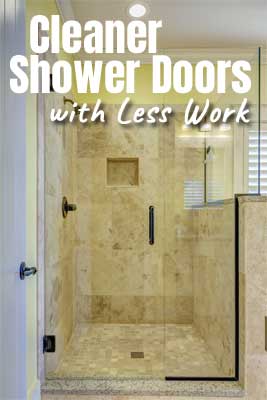
Best solution: start with dish soap + water, then spot-treat minerals with vinegar mix
Trade-off: Vinegar can help with minerals, but don’t “go nuclear” with strong acids or abrasives—scratching is forever.
Time to complete:
- Maintenance clean: 10–15 min
- Heavy buildup: 25–40 min (often takes 2 passes)
Realistic expectation: If you’ve got etched glass (true damage), no cleaner “fixes” that. You can improve clarity, but you can’t undo etching without polishing.
4) Low-E / Coated Glass (High Risk Category)
Best solution: mild, non-alkaline soap + water; or a cleaner labeled safe for Low-E
Avoid harsh chemicals and abrasives, and be extra careful on coated surfaces. Multiple manufacturers emphasize gentle methods, avoiding direct sunlight, and avoiding abrasive cleaners/tools on coated glass.
Time to complete:
- Light clean: 10–20 min (small area)
- Whole house varies widely—plan 60–120+ min
Important risk: Some coated surfaces can be damaged by improper methods. When in doubt, follow the window/glass manufacturer’s care instructions.
5) Tinted Glass / Window Film
Best solution: ammonia-free cleaner or mild soap + water
Avoid: ammonia-based cleaners (they can degrade tint film over time).
Time to complete:
- A few interior panes: 10–20 min
Internal guide worth linking because it hits the key “don’ts”:
https://www.windowcleankits.com/how-to-clean-tinted-windows/
6) Tempered/Toughened Glass (Patio Doors, Some Shower Glass)
Best solution: gentle cloth + mild cleaner
Some manufacturers note toughened glass may have surface “pickup” from manufacturing and recommend soft cloths to reduce scratching risk.
7) Car Glass (Windshields + Interior Film)
Best solution: alcohol + water (lightly applied), then dry buff
Interior windshields often have a stubborn film that needs a degreasing step.
If you want a dedicated walkthrough, your site’s windshield guide includes a nice comparison of solution types:
https://www.windowcleankits.com/clean-windshield-from-inside/

Product + Tool Recommendations
If you’re putting together a setup that works across glass types, this combo covers a lot:
- Microfiber towels + a good squeegee (for streak-free finishing)
- A simple kit (so you’re not piecing things together)
Helpful internal pages to browse:
Printable Checklist: Choose The Right Glass Cleaner

Print this section:
✅ Identify glass type (regular / tinted / Low-E / tempered / mirror)
✅ Confirm if there’s a coating or film
✅ Start mild: dish soap + water
✅ Use alcohol mix for oily film (light application)
✅ Use vinegar mix for light mineral spots (only if appropriate)
✅ Avoid abrasives, razor blades, and harsh chemicals on coated glass
✅ Clean out of direct sunlight for fewer streaks
✅ Finish with a squeegee or a second dry microfiber towel
Frequently Asked Questions
What’s the #1 cause of streaks—bad cleaner or bad technique?
Technique. Too much product + not finishing with a clean dry towel/squeegee is the usual culprit. Also, cleaning in direct sun makes streaks far more likely.
Is Windex safe for all glass?
Not all. The big watch-out is tinted film and some coated glass—many guides recommend avoiding ammonia on tinted/film surfaces.
Can I use a razor blade to remove stuck-on stuff?
Many glass-care guidelines advise not using scrapers/razors—especially on coated glass—because scratching or coating damage is a real risk.
Why does my glass look “cloudy” even after cleaning?
It might be mineral etching, micro-scratches, or coating wear. Cleaning helps, but it can’t reverse physical damage—only reduce residue.
Resources For More Information
- Andersen Windows – Glass cleaning guidance: https://parts.andersenwindows.com/items_Care_GlassClean.html
- HPG – Glass cleaning guidelines (coated/tinted cautions): https://www.hpglazing.com/glass-cleaning
- Australian Glass & Glazing Association (AGGA) – Cleaning guidelines PDF: https://glassaustralia.com/wp-content/uploads/2022/05/Guidelines-for-Cleaning-Glass.pdf
Conclusion
If you want the simplest way to win at glass cleaning, it’s this:
Use the mildest cleaner that works, match it to the glass type, and finish like you mean it (squeegee or dry-buff).
Most people overcomplicate the solution and underdo the finishing step. Get that part right, and suddenly “streak-free” stops being luck—and starts being repeatable.
If you want, tell me the main glass types you’re cleaning most (shower doors, Low-E windows, tinted panes, car glass, etc.), and I’ll recommend a “one-kit + two-sprays” setup that covers your situation with minimal fuss.