
Let’s be honest — most people don’t hate clean windows. They hate how long it takes to get them clean.
I’ve cleaned everything from small bathroom panes to full walls of glass, and the difference between a 3-hour job and a 60-minute job isn’t effort… it’s efficiency. The pros don’t move faster because they rush. They move faster because they eliminate wasted motion.
If you want to clean windows quicker without sacrificing results, these are the ten tricks that actually save time.
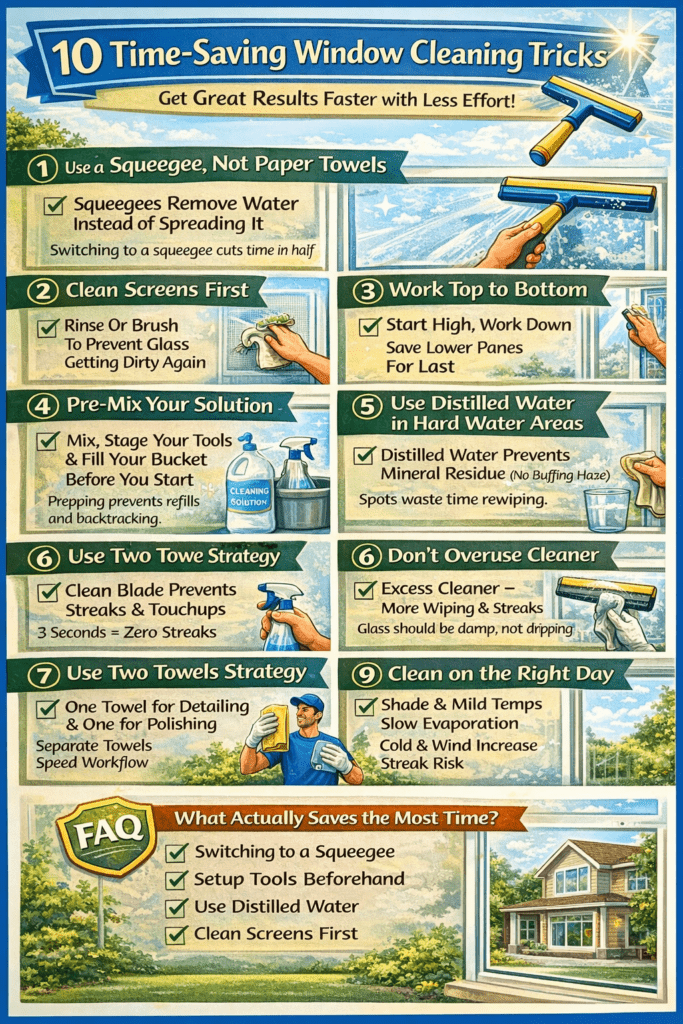
1. Use a Squeegee, Not Paper Towels
If you’re still using paper towels and spray bottles for large panes, you’re adding unnecessary time. A proper squeegee removes water in one pass instead of wiping moisture around repeatedly (How to avoid cheap squeegees). That alone can cut cleaning time in half on exterior glass.
If you’re not sure what setup to use, this guide breaks down quality options:
https://www.windowcleankits.com/window-cleaning-kits/
Trade-off: There’s a small learning curve. But once mastered, it’s dramatically faster.
2. Clean Screens First
This is one most homeowners skip.
Dirty screens re-contaminate clean glass immediately. You end up re-wiping windows that were technically already clean. Quick rinse or brush the screens before touching the glass. It prevents double work.
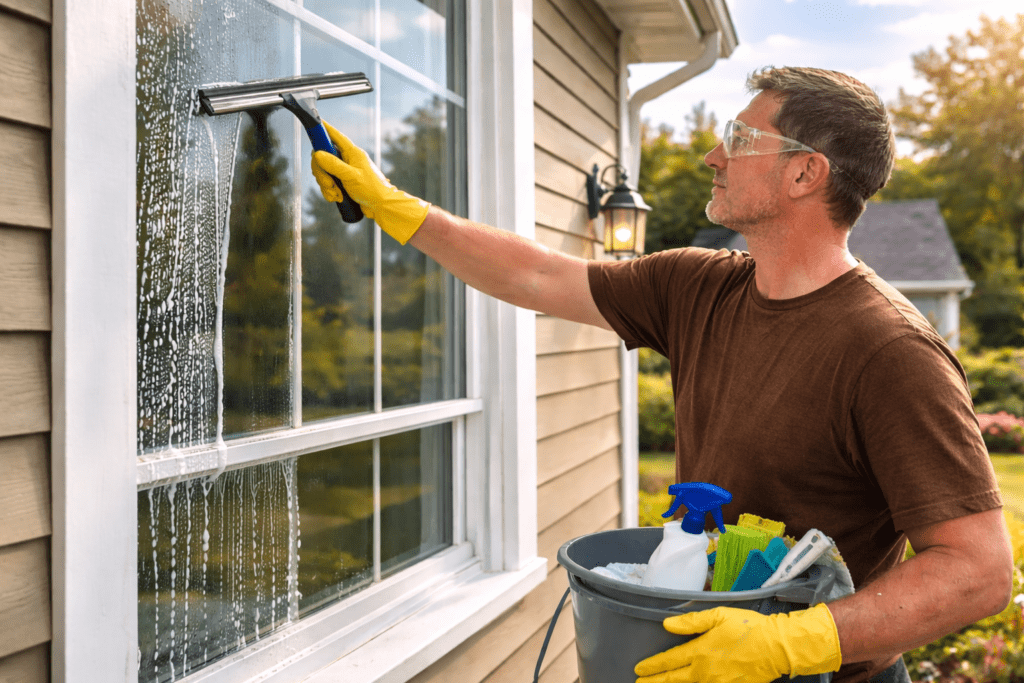
3. Work Top to Bottom
Gravity is either your enemy or your helper. If you clean lower panes first, drips from above will undo your effort. Always start high and move downward.
It sounds simple, but it eliminates re-cleaning sections.
4. Pre-Mix Your Cleaning Solution
Running back to refill bottles wastes time.
Before you start:
- Mix your solution.
- Fill your bucket.
- Lay out towels.
- Stage your tools.
Pros call this “workflow setup.” It reduces interruptions dramatically. The professional method is outlined clearly here:
https://www.windowcleankits.com
5. Use Distilled Water in Hard Water Areas
If you live where mineral deposits are common, tap water leaves residue. Then you spend extra time buffing haze. Distilled water dries cleaner, reducing touch-ups. Less correction = less time.
6. Don’t Overuse Cleaner
More spray does not equal cleaner glass. Excess solution creates:
- Longer drying time
- More wiping
- More streak risk
Light application is faster because you remove less moisture. Realistic expectation: The glass should be damp, not dripping.
7. Wipe the Squeegee Blade After Every Pass
This takes two seconds and prevents streaks that force you to redo sections. Skipping this step costs more time than it saves.
Edge detailing is especially important — if streaks appear later, you’ll spend more time fixing them. This guide explains correction techniques:
https://www.windowcleankits.com/fix-window-streaks-after-drying/
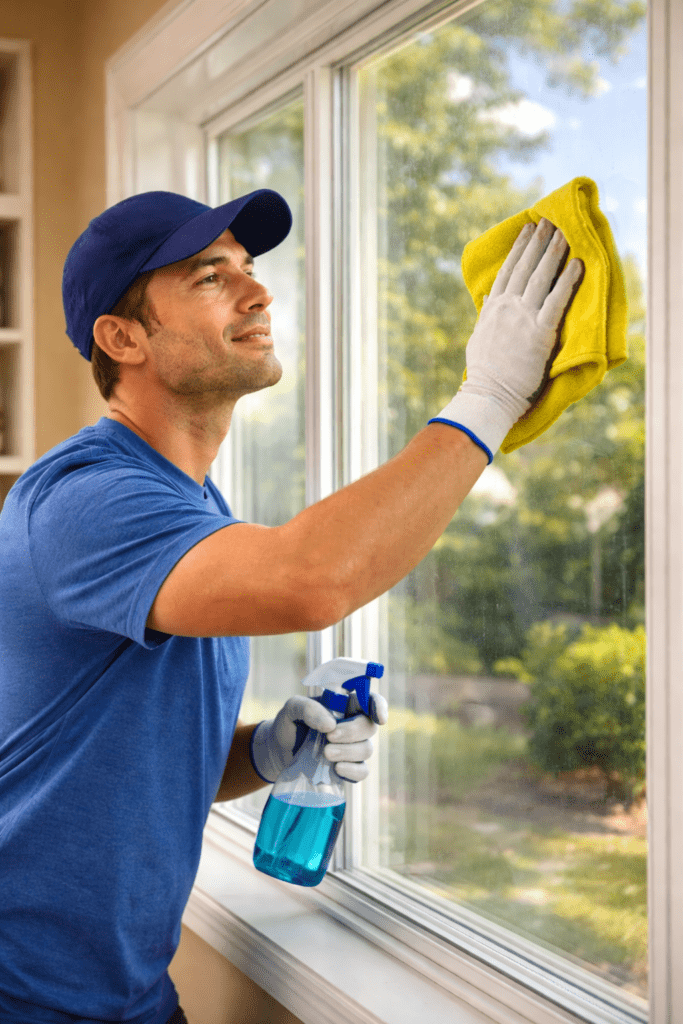
8. Use Two Towels Strategy
One towel for:
- Edges and detailing
One towel for:
- Final polish
Using one saturated towel slows you down and creates smears. Separate towels keep workflow efficient.
9. Clean on the Right Day
Cleaning in direct sunlight can be done — but it forces you to move faster and increases streak risk. If possible:
- Clean in shade.
- Choose mild temperatures.
- Avoid windy conditions (dust sticks immediately).
Less environmental interference = fewer corrections.
10. Break Large Jobs Into Zones
Instead of cleaning all exteriors one weekend and all interiors another, divide by zones:
- Front of house
- Back of house
- Upstairs
- Downstairs
Smaller segments reduce fatigue and keep performance consistent. Time-saving isn’t just about speed — it’s about sustainability.
What Actually Saves the Most Time?
If I had to rank the biggest impact:
- Switching to a squeegee.
- Proper workflow setup.
- Using distilled water in hard water areas.
- Cleaning screens first.
Those four adjustments eliminate the majority of wasted effort.
Trade-Offs to Be Aware Of
Time-saving can’t mean corner-cutting.
If you:
- Skip screen cleaning
- Ignore blade wiping
- Use cheap tools
- Rush edge detailing
You’ll spend extra time fixing streaks later. Efficiency is about smart movement — not rushing.
Realistic Expectations
Even when you move efficiently:
- Large homes still take time.
- Two-story access slows things down.
- Heavy buildup requires extra passes.
- Seasonal pollen may require more effort.
But with these tricks, most homeowners can reduce window cleaning time by 30–50%. That’s meaningful.
Frequently Asked Questions
How long should it take to clean a typical house?
For a standard single-story home using proper tools, 1–2 hours is realistic.
Is it faster to use microfiber only?
On small interior panes, yes. On large exteriors, no — squeegee is faster.
Should I clean inside and outside the same day?
If you have time, yes. It ensures consistent clarity and avoids confusion about which side has streaks.
Do professional cleaners move faster because of strength?
No. They move faster because they eliminate wasted motion.
What’s the biggest time-waster?
Redoing streaks that could’ve been prevented with proper technique.
Reputable Resources for More Information
- International Window Cleaning Association (IWCA): https://www.iwca.org
- Glass Association of North America (GANA): https://www.glasswebsite.com
- U.S. Environmental Protection Agency Safer Choice Program: https://www.epa.gov/saferchoice
Conclusion
Cleaning windows faster isn’t about scrubbing harder or rushing.
It’s about:
- Using the right tools.
- Controlling moisture.
- Working top to bottom.
- Preventing rework.
If you implement even half of these tricks, you’ll notice the difference immediately. Window cleaning doesn’t have to be an all-day chore. With the right system, it becomes efficient, repeatable, and surprisingly manageable.