
Mold can be a persistent problem around window seals, leading to potential health risks and damage to your home. This guide provides effective methods for eliminating mold and preventing its recurrence, ensuring a healthier indoor environment.
Understanding Mold Growth Factors
To effectively combat mold, it’s important to recognize the conditions that foster its growth:
1. Poor Airflow
Insufficient ventilation can trap moisture, leading to condensation on window surfaces. In older homes, windows often lack proper ventilation, causing moisture to accumulate and creating an ideal breeding ground for mold.
For instance, in rooms that are rarely used or in basements, the stagnant air can quickly become damp. Installing exhaust fans in bathrooms and kitchens, opening windows regularly and using ceiling fans can significantly improve airflow, reducing moisture buildup and the potential for mold growth.

2. High Humidity
Environments with humidity levels above 60% are highly conducive to mold development. For example, bathrooms and kitchens, where steam from showers and cooking often elevate humidity levels, are common hotspots.
Investing in a hygrometer to monitor indoor humidity can help manage this. Using dehumidifiers in these areas can maintain optimal humidity levels, preventing mold spores from finding a suitable environment to thrive.
3. Temperature Variations
Temperature fluctuations between indoor and outdoor environments can lead to moisture buildup, especially on window seals. In winter, warm indoor air contacts the cold window surfaces, causing condensation.
This is particularly evident in bedrooms where windows remain closed to retain heat. Installing double-glazed windows can alleviate this issue by reducing the temperature differential. Additionally, using insulating curtains and ensuring windows are properly sealed can minimize condensation, thereby lowering the risk of mold growth.
By managing humidity, enhancing ventilation and controlling temperature variations, you can significantly reduce the chance of mold developing on window seals. Consistent maintenance and proactive measures are crucial to maintaining a mold-free home.
Step-by-Step Mold Removal Process
Follow these steps to effectively remove mold from window seals:

Essential Cleaning Supplies
- White vinegar
- Water
- Spray bottle
- Scrub brush or toothbrush
- Microfiber cloth
- Hydrogen peroxide (optional)
- Liquid soap
Cleaning Procedure
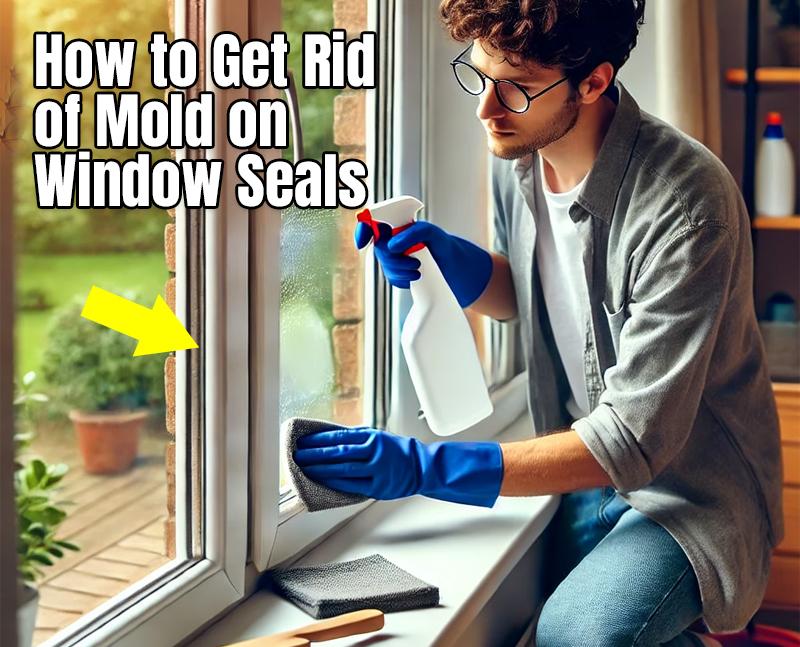
1. Prepare Your Cleaning Solution
Mix equal parts of water and white vinegar in a spray bottle. This solution is effective due to vinegar’s acidic nature, which helps break down mold spores. Alternatively, create a gentle soap solution by combining liquid soap and water. This is particularly useful for delicate surfaces or when a milder cleaning approach is preferred.
2. Apply the Solution
Generously spray the affected area and allow it to sit for 10-15 minutes. This waiting period is crucial as it gives the solution time to penetrate and break down the mold.
For example, in a bathroom with moldy window seals, spraying the solution and leaving it to work while you clean other areas ensures thorough mold softening before scrubbing.

3. Scrub the Area
Use a scrub brush or toothbrush to remove the mold. The brush’s bristles can reach into crevices and ensure a deeper clean.
Applying more solution as needed helps maintain moisture, making it easier to scrub away stubborn mold. For instance, kitchen windows often have mold in hard-to-reach corners; a toothbrush is ideal for these spots.
4. Rinse and Dry
Wipe the area with a clean, damp microfiber cloth to remove any remaining mold and cleaning solution. Thorough drying is essential to prevent future mold growth.
Using a microfiber cloth is effective because it absorbs moisture well and doesn’t leave lint. After cleaning, you can leave a small fan nearby or keep the windows open to ensure the area dries completely.
5. Optional Treatment
For persistent mold, apply hydrogen peroxide directly to the area and scrub again. Hydrogen peroxide has antifungal properties and can tackle mold that resists initial cleaning.
For example, in basements where mold might be more ingrained, applying hydrogen peroxide can provide an extra level of cleaning. Be sure to use it in a well-ventilated area and rinse thoroughly after use to avoid any residue.
Effectiveness of Various Cleaning Agents
Different cleaning agents can be used to combat mold. The following table summarizes their effectiveness:
| Cleaning Agent | Effectiveness | Notes |
|---|---|---|
| White Vinegar | Highly effective | Natural and safe; effective against most mold types. |
| Hydrogen Peroxide | Effective | Has antifungal properties; ideal for stubborn mold. |
| Liquid Soap | Moderately effective | Gentle and safe for most surfaces. |
| Bleach | Not recommended | Does not penetrate surfaces; may cause discoloration. |
Preventive Measures to Avoid Future Mold Growth
1. Control Indoor Humidity
Keep humidity levels below 60% using dehumidifiers in damp areas. For instance, placing a dehumidifier in a basement or bathroom can significantly reduce moisture in the air, making it less conducive for mold growth. Monitoring humidity with a hygrometer ensures you maintain optimal levels, especially in humid climates or seasons.
2. Enhance Ventilation
Open windows regularly and use exhaust fans in kitchens and bathrooms to improve airflow. Proper ventilation reduces moisture accumulation, which is vital in preventing mold. For example, turning on an exhaust fan during and after a shower helps expel steam and moisture from the bathroom. In kitchens, using an exhaust fan while cooking can prevent condensation on windows and walls.
3. Seal Windows Properly
Ensure that window seals are intact to prevent moisture ingress. Damaged or worn-out seals can allow water to seep in, creating a perfect environment for mold. Regularly inspect your windows for any gaps or cracks, especially after severe weather.
Applying weather stripping or caulking around the window frames can effectively block moisture from entering, as seen in older homes where seals may deteriorate over time.
4. Regular Maintenance
Clean window seals periodically with vinegar or soap to prevent mold buildup. Scheduling regular cleaning, such as monthly or quarterly, helps keep mold at bay.
For example, a simple mixture of vinegar and water can be sprayed on window seals, left to sit for a few minutes and then wiped away to maintain cleanliness and prevent mold from establishing itself.
5. Use Mold-Resistant Products
Consider mold-resistant paints and sealants for window frames. These products contain antimicrobial properties that inhibit mold growth, making them ideal for areas prone to moisture.
For instance, when painting or sealing bathroom window frames, using a mold-resistant product can add an extra layer of protection against mold, extending the life and appearance of the windows.
Implementing these strategies not only helps in managing mold but also contributes to a healthier indoor environment. Regular attention to humidity, ventilation and maintenance ensures your windows remain mold-free and in excellent condition.
Quick Tips for Mold Prevention
- Inspect for leaks around windows and repair them promptly.
- Limit indoor plants in humid areas to reduce moisture.
- Utilize moisture-absorbing products like silica gel in window sills.
The Bottom Line:
Effectively managing mold around window seals is essential for maintaining a safe and healthy home environment. By understanding the conditions that foster mold growth, such as high humidity, poor airflow and temperature variations, you can implement targeted strategies to prevent mold from developing.
Regularly cleaning window seals with effective solutions like vinegar and water, ensuring proper ventilation and using mold-resistant products can significantly reduce mold risk. Consistent maintenance and proactive measures will help keep your window seals mold-free, ensuring a cleaner, healthier indoor space for you and your family.
Last Updated August 1, 2024