
If you’ve ever cleaned a window that looked “clean” from a distance but still had tiny paint specks, adhesive smears, or stubborn grime stuck to the glass, you already know where a razor scraper comes in.
I’ve used razor scrapers on everything from post-construction debris to old sticker residue that’s been baking in the sun for years. They’re powerful tools. But here’s the honest truth:
A razor scraper can either make your glass look flawless — or permanently scratched.
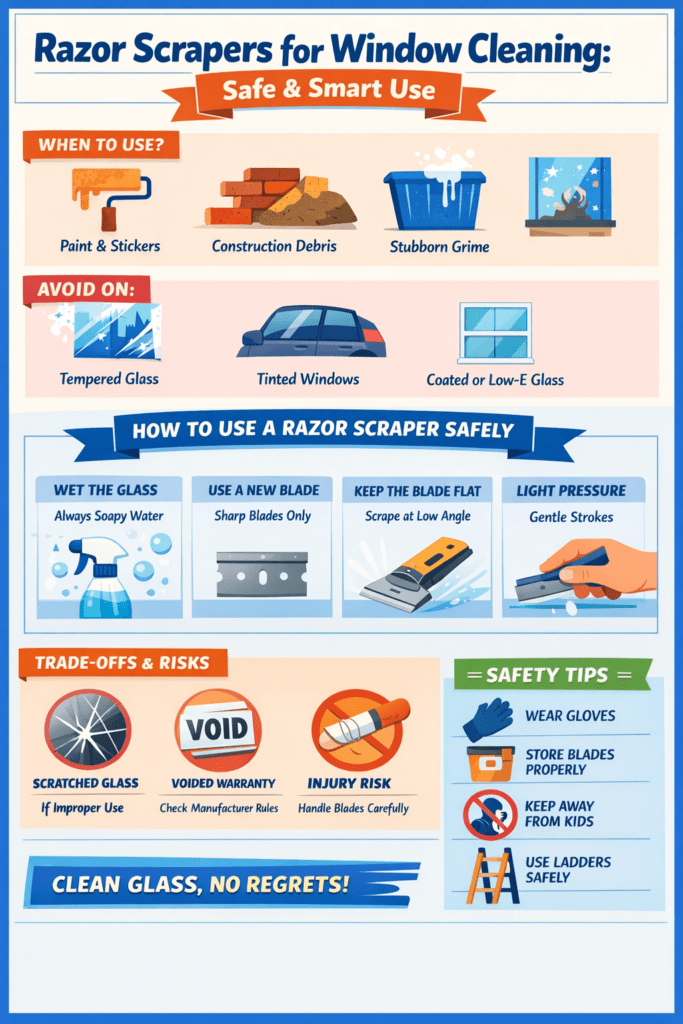
The difference is technique, preparation, and knowing when not to use one.
Let’s break this down the right way.
What Is a Razor Scraper (And Why Use One)?
A razor scraper is a handheld tool that holds a flat razor blade at a fixed angle, allowing you to mechanically remove debris from glass.
You use it for:
- Paint overspray
- Dried construction debris
- Tape and sticker residue
- Tree sap
- Hard water buildup (light cases)
- Baked-on grime
It’s not for everyday dirt. Your squeegee and scrubber handle that. If you’re unsure about your basic setup, start with a proper window cleaning kit before jumping to scraping.
Scrapers are specialty tools — not daily drivers.
When You Should Use a Razor Scraper
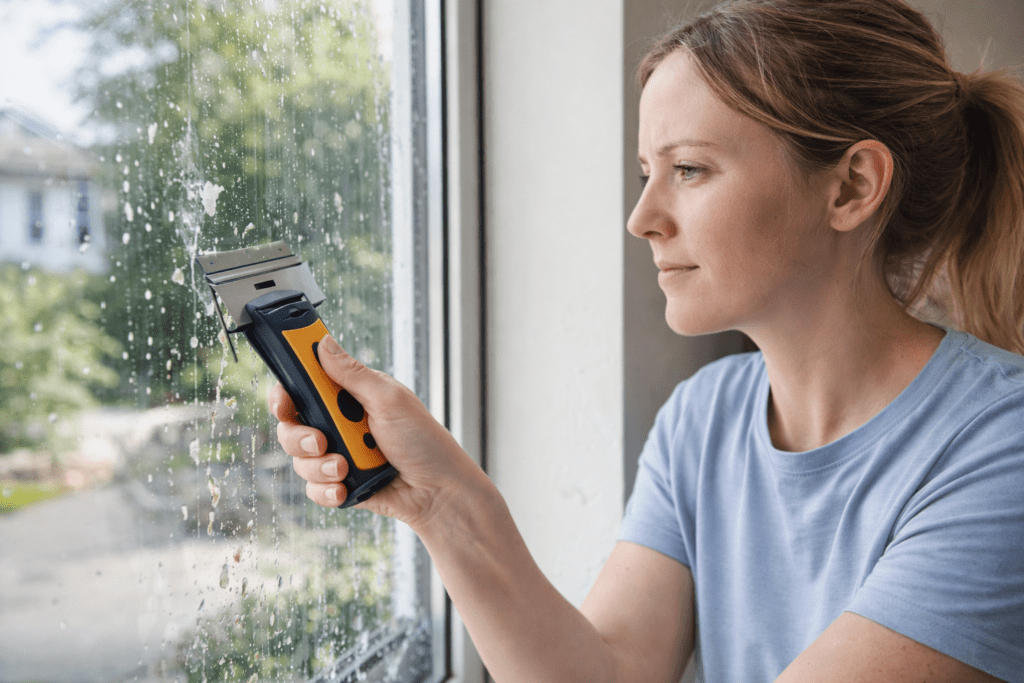
Use a razor scraper when debris is:
- Physically stuck to the surface
- Raised above the glass
- Resistant to scrubbing
If you can feel it with your fingernail, scraping may be appropriate.
Post-renovation homes are the most common scenario. I’ve seen windows covered in tiny drywall mud dots and paint mist. A scrubber alone won’t fix that.
Another common case? Old sticker glue on patio doors. After years in the sun, adhesive turns rock hard. Scraping is often the cleanest solution.
If you regularly deal with heavy debris, you may also benefit from tools discussed in our guide to cleaning hard water stains on windows.
When You Should Not Use a Razor Scraper
This is where people get into trouble.
Avoid razor scrapers on:
- Tempered glass with fabrication debris (FD)
- Tinted windows
- Coated or Low-E glass
- Acrylic or plexiglass
- Scratched or compromised glass
Tempered glass can contain microscopic debris from manufacturing. When you scrape across it, you can drag those particles and cause visible scratching.
This is rare — but real.
If you’re not sure what type of glass you have, check the corner stamp. Tempered glass usually has a marking in one corner. If you’re unsure, don’t guess.
The Right Way to Use a Razor Scraper
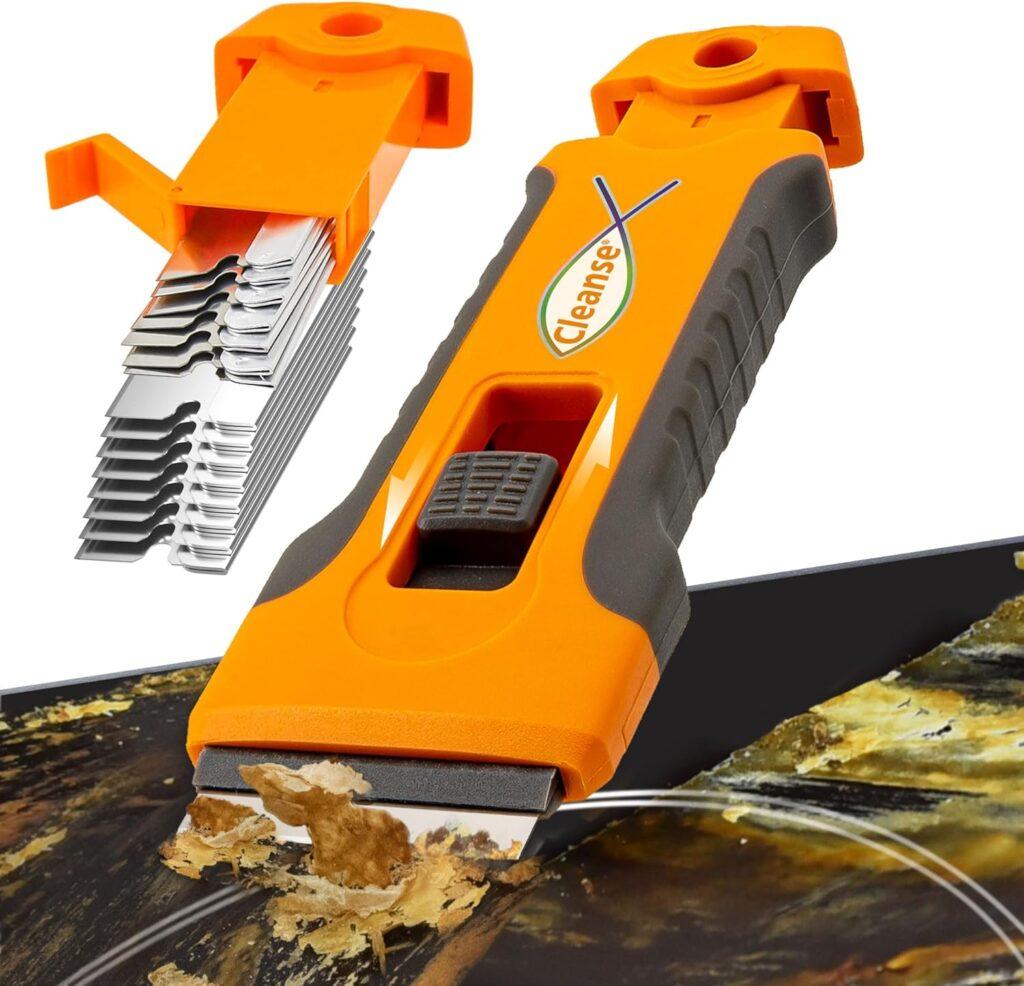
This is where skill matters.
Step 1: Wet the Glass Thoroughly
Never scrape dry glass.
Flood the surface with soapy water. Your glass should be lubricated the entire time. The water acts as a buffer between blade and surface.
Dry scraping is the fastest way to scratch glass.
Step 2: Use a New Blade
Dull blades scratch.
Blades are cheap. Windows are not. I replace blades frequently — especially on large jobs. If you see rust or nicks, toss it.
Step 3: Keep the Blade Flat
Angle matters.
Keep the scraper flat against the glass (almost parallel). Do not dig the corners in. The entire blade edge should contact the glass evenly.
Step 4: Use Controlled, Light Pressure
Let the blade do the work.
You’re not chiseling stone. Short, smooth strokes are better than aggressive digging.
Step 5: Clean the Blade Often
Debris can collect along the edge. Wipe the blade clean frequently to avoid dragging particles.
Trade-Offs and Risks You Should Know
Let’s be direct.
Risk #1: Scratching Glass
This is the big one. It’s uncommon when done properly — but it happens when rushed.
Risk #2: Voiding Window Warranties
Some manufacturers warn against blade scraping. Especially with certain coatings.
Risk #3: Personal Injury
Razor blades are sharp. Store safely. Retract when not in use.
Trade-Off:
Mechanical removal (scraping) is faster and often more effective than chemicals. But chemicals are lower risk.
For example:
- Adhesive remover = slower, safer
- Razor scraper = faster, more risk
The right choice depends on the situation.
Realistic Expectations
A razor scraper is not magic. It removes surface debris. It does not:
- Fix etched glass
- Remove deep mineral corrosion
- Repair scratches
If hard water has etched into the glass, you may need polishing or restoration instead of scraping. Also, scraping won’t replace proper technique with a squeegee. If streaking is your main problem, review our guide on how to clean windows without streaks.
Scraping is a finishing move — not the main event.
Safety Tips That Matter
- Always wear gloves if you’re new to using blades
- Never leave blades exposed
- Keep away from kids
- Store dry to prevent rust
- Dispose of blades properly
If you’re working on second-story windows, focus on ladder safety first. A razor scraper won’t help you if you’re unstable on a ladder.
Frequently Asked Questions
Can A Razor Scraper Scratch Glass?
Yes — if used incorrectly, on the wrong glass type, or without lubrication. When used properly on appropriate glass, it is generally safe.
Can I Use A Razor Scraper On Car Windows?
Yes, but avoid tinted surfaces. Factory tint inside the glass is usually safe. Aftermarket film is not. See more on cleaning car windshields here.
Should I Use Chemicals Before Scraping?
Often yes. Soften adhesive or debris first. It reduces pressure needed and lowers scratch risk.
How Often Should I Replace Blades?
As soon as they dull, rust, or nick. Many professionals replace blades daily on heavy jobs.
Is Steel Wool Safer Than A Razor Blade?
Fine 0000 steel wool can be effective on glass and is lower risk for some situations — but it still requires lubrication and testing.
Reputable Resources for More Information
- International Window Cleaning Association (IWCA) – https://www.iwca.org
- Glass Association of North America (GANA) – https://www.glasswebsite.com
- Occupational Safety and Health Administration (OSHA) – https://www.osha.gov
Final Thoughts
Razor scrapers are one of the most misunderstood tools in window cleaning. Used correctly, they’re incredibly effective and can restore clarity that scrubbing alone can’t achieve. Used carelessly, they can cause permanent damage.
The key is discipline:
- Wet glass
- Sharp blade
- Light pressure
- Correct surface
If you treat scraping as a precision technique instead of brute force, you’ll get professional-level results without unnecessary risk. And remember — the goal isn’t just clean windows. It’s clean windows without regrets.