
If I had to teach window cleaning in one principle, it would be this:
20% of what you do creates 80% of the results.
I’ve cleaned everything from small bathroom windows to entire walls of glass. And over time, you start to notice something:
People obsess over the wrong things like fancy sprays, specialty wipes, and expensive miracle products. But the biggest improvements in clarity and speed usually come from just a few core factors. Let’s break down what actually matters.
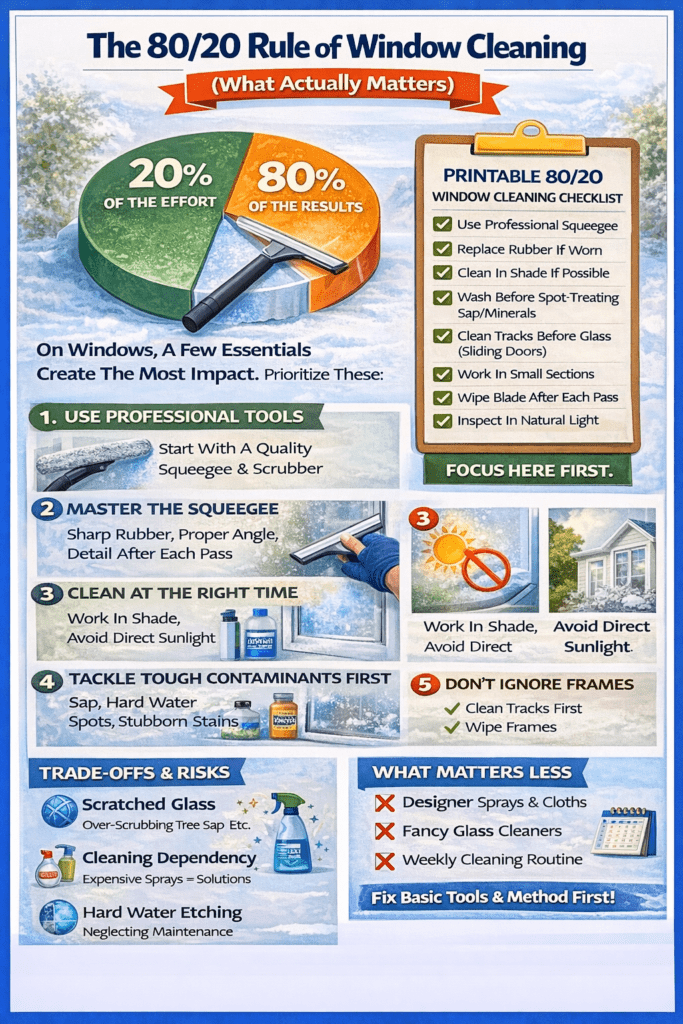
The 20% That Drives 80% of Results
Here are the things that move the needle the most:
- Proper tools
- Correct squeegee technique
- Cleaning in the right conditions
- Addressing major contaminants (sap, hard water, debris)
- Maintaining frames and tracks
Everything else is minor optimization.
1. Proper Tools (This Is Huge)
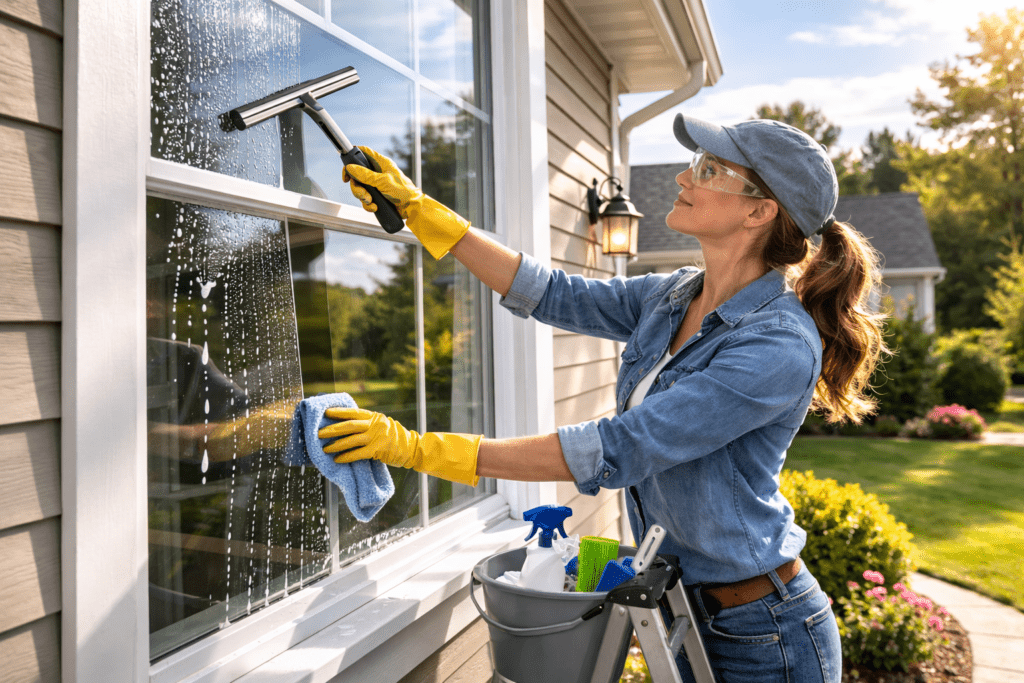
If you’re using paper towels and blue spray bottles, you’re fighting an uphill battle. A professional squeegee and scrubber combination eliminates 80% of streak problems immediately.
If you don’t already have one, start with a complete window cleaning kit. It’s the fastest way to upgrade your results.
Time to complete with proper tools:
10–15 minutes per average window.
Without proper tools:
20–30 minutes… with streaks.
That’s the 80/20 rule in action.
2. Squeegee Technique Matters More Than Soap
Most streaking comes from:
- Dirty rubber
- Poor angle
- Not wiping blade between passes
Not from the cleaning solution.
You can use basic dish soap and get professional results with good technique. But no product fixes bad mechanics. If your squeegee rubber is old or nicked, replace it. That small change makes a disproportionate difference.
3. Conditions Matter More Than Products
Cleaning in direct sunlight?
You’re making it harder.
Cleaning when glass is cool and shaded?
Much easier.
People often try to solve environmental problems with stronger chemicals. That’s backwards.
Work smarter:
- Clean in shade
- Work in small sections
- Squeegee immediately
Cold weather? Adjust solution. (See the cold weather cleaning guide.)
Again — small adjustments, big results.
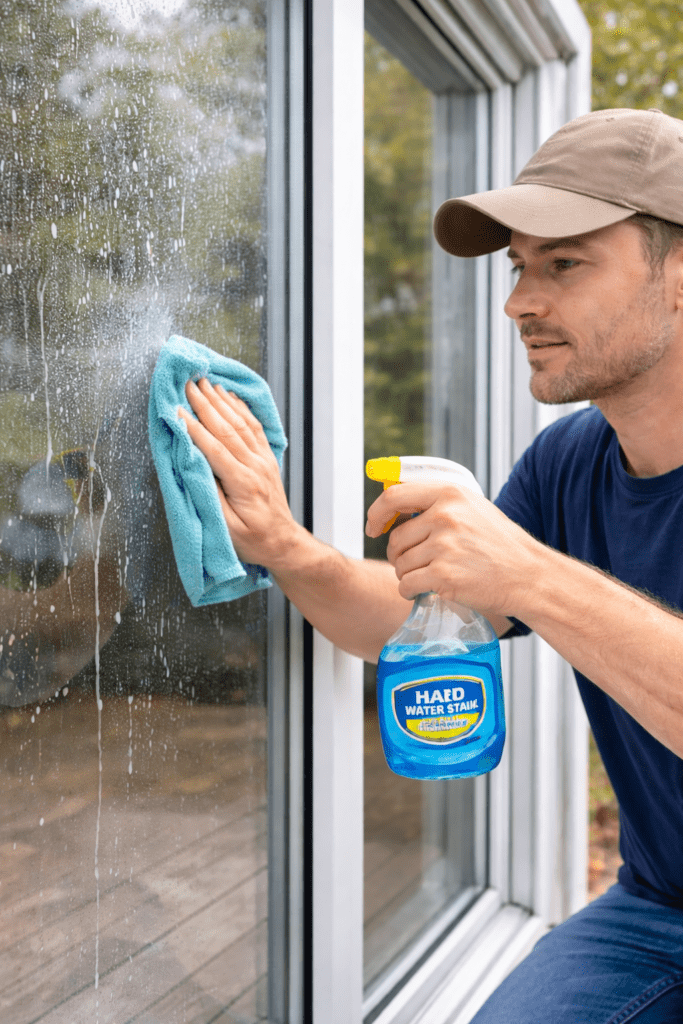
4. Major Contaminants: Solve the Big Problems First
- Tree sap.
- Hard water stains.
- Construction debris.
If these are present, no amount of regular washing will fix the appearance. Address the big issue first.
For example:
- Tree sap? Use alcohol and soften before wiping.
- Hard water? Use dedicated mineral remover.
Trying to clean around stubborn spots wastes time. Focus on the 20% of contaminants that are causing 80% of visual problems.
5. Frames and Tracks: The Overlooked 20%
You can have perfectly clean glass — but dirty tracks and frames make the door feel neglected. On sliding doors especially, cleaning the tracks first makes a huge difference.
If you haven’t cleaned tracks recently, follow the method in our best way to clean sliding glass door guide. It’s often the hidden 20% that improves overall appearance the most.
What Doesn’t Matter as Much as People Think
Let’s be honest:
- Expensive “streak-free” sprays
- Designer microfiber brands
- Specialty scented cleaners
- Cleaning obsessively every week
Those are refinements – not fundamentals.
If you fix tools and technique first, everything else becomes secondary.
Trade-Offs and Risks
Risk #1: Over-Cleaning
Scrubbing too aggressively or scraping unnecessarily increases scratch risk.
Risk #2: Product Dependency
Believing better chemicals equal better results leads to frustration.
Risk #3: Ignoring Maintenance
If you skip regular cleaning entirely, small issues turn into hard water etching.
The 80/20 rule doesn’t mean neglect — it means focus.
Realistic Expectations
If you apply the 80/20 rule correctly:
- Windows look clearer
- Cleaning takes less time
- Fewer streaks
- Less frustration
But don’t expect:
- Deep scratches disappearing
- Etched glass repairing itself
- Instant perfection without practice
Technique improves with repetition.
Time Investment vs. Return
Here’s what I’ve seen:
| Action | Time Invested | Visual Impact |
|---|---|---|
| Upgrade to proper squeegee | 5 minutes | Huge |
| Replace worn rubber | 2 minutes | Huge |
| Work in shade | 0 minutes | Moderate |
| Buy premium spray | 5 minutes | Minimal |
| Switch towel brands | 0 minutes | Minimal |
That’s the 80/20 rule in a table.

Printable 80/20 Window Cleaning Checklist
Copy and print this:
80/20 Window Cleaning Checklist
☐ Use professional squeegee
☐ Replace rubber if worn
☐ Clean in shade if possible
☐ Wash before spot-treating
☐ Remove sap or mineral buildup first
☐ Clean tracks before glass (sliding doors)
☐ Work in small sections
☐ Wipe blade after each pass
☐ Inspect in natural light
Focus here first.
Frequently Asked Questions
What Is the Biggest Mistake in Window Cleaning?
Using improper tools and blaming the solution.
Do I Need Special Glass Cleaner?
Not usually. Technique matters more than product.
How Often Should I Clean Windows?
Every 1–3 months depending on exposure. Maintenance prevents major buildup.
Can the 80/20 Rule Apply to Exterior Windows?
Absolutely. Especially when dealing with hard water or sap.
What If I Still Get Streaks?
Check your rubber first. Then check your angle and pressure.
Resources for More Information
- International Window Cleaning Association (IWCA) – https://www.iwca.org
- Glass Association of North America (GANA) – https://www.glasswebsite.com
- Occupational Safety and Health Administration (OSHA) – https://www.osha.gov
Final Thoughts
Window cleaning doesn’t need to be complicated. If you focus on:
- Proper tools
- Good technique
- Solving major issues first
- Working in the right conditions
You’ll get 80% of the results with far less effort. Most frustration comes from focusing on the wrong 80%. Shift your focus to the vital 20%. Clean smarter — not harder.