
When people say, “I’ve tried everything and my outside windows still look streaky,” I usually find the same culprit: the scrubber isn’t doing the heavy lifting. The squeegee gets all the glory, but the scrubber is what breaks the grip of pollen film, road grime, sprinkler mist, and that stubborn “why is this window always hazy?” layer.
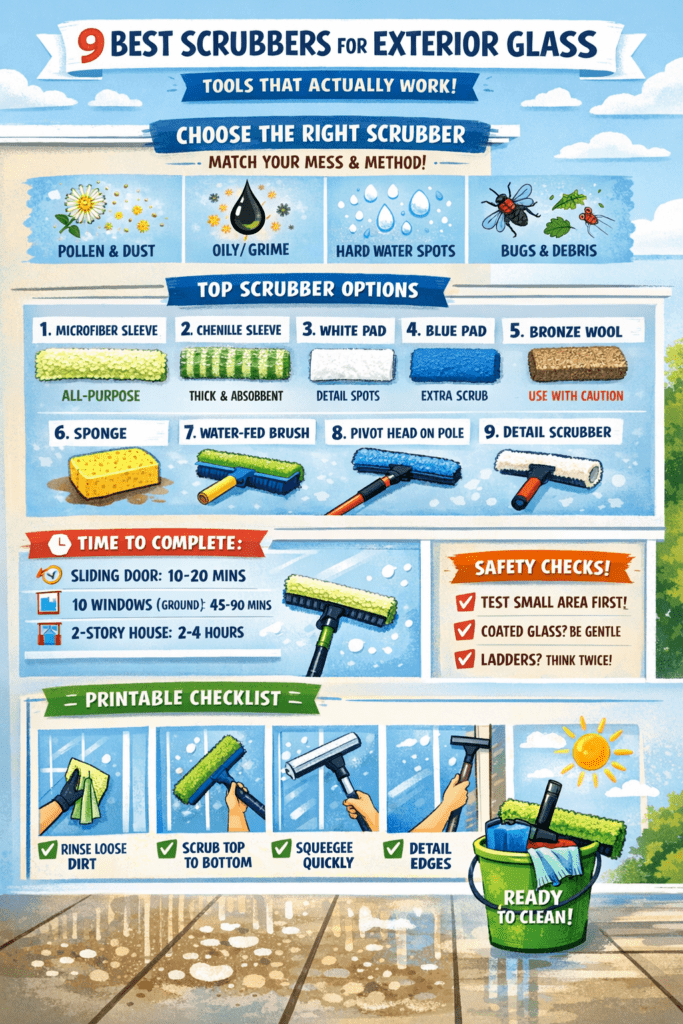
This guide is focused on exterior glass scrubbers—what to buy, how to choose, and what to avoid—especially if you’re cleaning from the ground with a pole.
If you want a quick baseline on tools and kits (including squeegee + scrubber combos), these pages pair well with this article:
- Window cleaning kits overview
- Brush + pole options for exterior reach
- Best time of day to wash (reduces streak stress)
- Squeegee technique refresher
What “Best Scrubber” Really Means (for Outside Windows)
Exterior glass is usually a combo of:
- Dry dust + pollen (smears if you don’t loosen it fully)
- Oily film (traffic, BBQ smoke, fingerprints around sliders)
- Mineral spotting (sprinklers/hard water)
- Stuck-on debris (bug dots, tree sap mist, bird gifts)
So the “best scrubber” is the one that matches the mess and your method:
- Hand-cleaning a patio slider? You can use more pressure and a thicker sleeve.
- Cleaning second-story panes with a pole? You need glide + control + rinse efficiency.
Also: your scrubber can’t fix everything. If the glass has etched hard-water damage or construction debris that scratched, you can improve it, but you may not get “brand-new glass” without restoration methods (and that’s where risk goes up fast). The IWCA and NGA both emphasize using proper procedures and testing a small area first.
The 9 Scrubber Types I’d Actually Consider
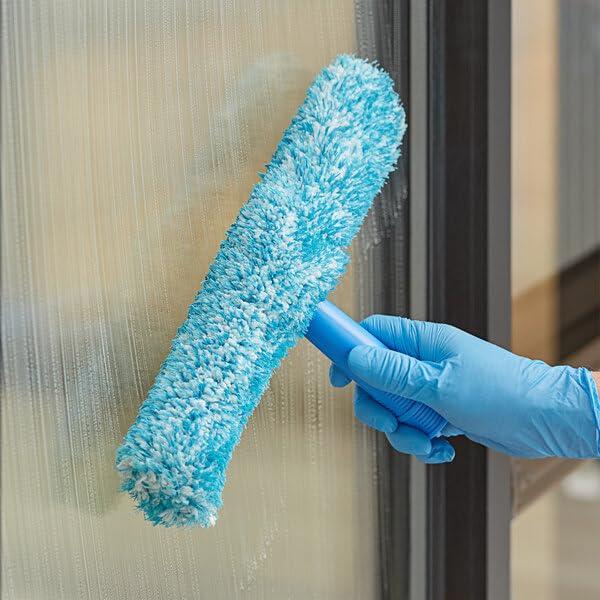
1) Microfiber “Strip Washer” Sleeve (all-purpose winner)
Best for: routine exterior dirt, pollen, light grime
Why it works: microfiber grabs fine particles instead of just pushing them around.
Watch-outs: cheap sleeves shed lint and leave fuzz; wash and air-dry to keep it grabby.
If you’re using a squeegee-scrubber combo tool, your “sleeve quality” matters more than people think. Your scrub step sets up your finish.
2) Chenille Microfiber Sleeve (thick + fast on big panes)
Best for: large windows, sliding doors, faster coverage
Trade-off: holds lots of water (great), but can drip more (annoying).
Tip: this is where good technique saves time—scrub, then squeegee immediately before it flashes dry.
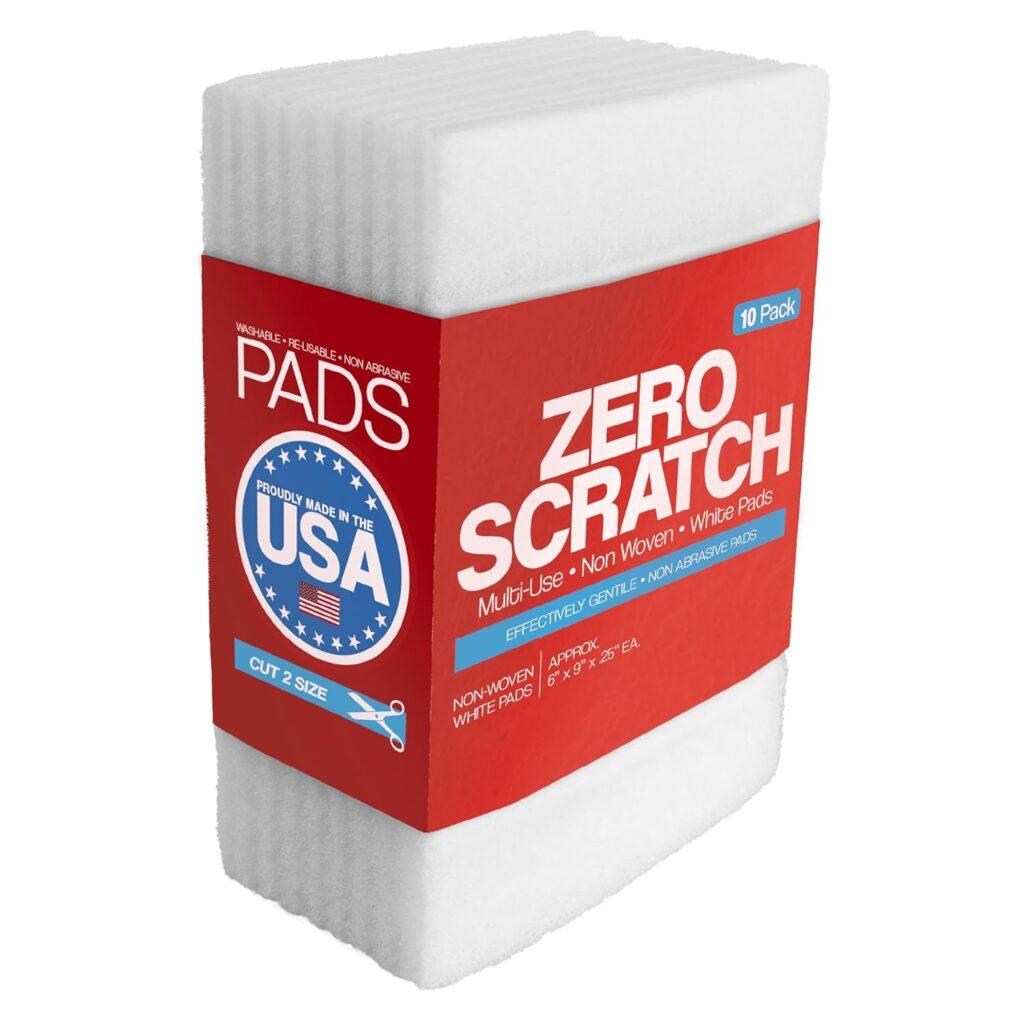
3) Abrasive “White Pad” (safe-ish detail pad)
Best for: edge grime lines, bug marks, small stubborn spots
Why I like it: more bite than microfiber without being aggressive.
Risk: still test first—coated or specialty glass needs caution. NGA’s guidance stresses care on coated surfaces and to avoid abrasive approaches unless you know what you’re dealing with.
4) Non-scratch “Blue Pad” (a step up in scrubbing power)
Best for: stuck-on grime on standard exterior glass
Trade-off: more friction = more fatigue on a pole.
Rule: if you’re pushing hard enough to flex the glass (yes, people do this), you’re overdoing it.
5) Bronze Wool (ONLY for specific situations)
Best for: certain spot-cleaning jobs on appropriate glass
Big warning: this is not a casual tool. Used wrong, it can leave damage or micro-scratching—especially on treated/coated glass. If you don’t know the glass type, skip it and stick with pads designed for glass.
6) Natural Sponge (classic for hand work)
Best for: hand-cleaning, frames/sills, odd shapes
Trade-off: doesn’t “grab” gritty pollen as well as microfiber, so it can smear unless you rinse often.
7) Water-fed Pole Brush (best for high windows + safer workflow)

Best for: second story+ windows, solar panels, frequent maintenance washes
Why it’s great: you’re washing and rinsing continuously from the ground, which reduces ladder time and speeds up big jobs.
Trade-off: setup time + water quality matters (tap water can spot).
If you’re in a hard-water area, consider distilled/purified water strategies to reduce spotting.
8) Pivoting Scrubber Head on a Pole (best for weird angles)
Best for: transoms, “witch windows,” angled glass
Downside: pivot heads have a learning curve—at first you’ll feel like the tool has a mind of its own.
9) Detailing Scrubber (small pad/mini sleeve)
Best for: corners, tight panes, french panes, edges around screens
Why it matters: most streak complaints start in the corners where the big sleeve didn’t fully scrub.
Decision Guide: Pick Your Scrubber in 60 Seconds
Choose Microfiber Sleeve if:
- You want the most “universal” option for exterior glass.
Choose Chenille if:
- You’re doing big panes and want speed (and can manage drips).
Choose White/Blue Pads if:
- You get stuck-on spots and need controlled extra bite.
Choose Water-fed Brush if:
- You’re regularly cleaning high exterior windows and want safer, repeatable results.
And if you want simple kit recommendations that bundle scrubber + squeegee + pole options, start here: https://www.windowcleankits.com/window-cleaning-kits/
Realistic Time-to-Complete Estimates
These assume typical home exterior grime (not heavy restoration):
- Single sliding glass door (outside only): 10–20 minutes
- 10 standard exterior windows (ground floor): 45–90 minutes
- 10 standard exterior windows (mix of 1st + 2nd story, using pole): 75–140 minutes
- Full “outside only” small home: 2–4 hours depending on access, screens, and spotting
Big reality check: setup + moving around the house is often half the time. The right scrubber reduces “re-scrub passes,” which is the sneaky time killer.
Trade-Offs & Risks (Read This Before You Go Aggressive)
- Coated glass can be sensitive. Always test one small corner first.
- Abrasives can escalate fast. Pads/wool can solve one spot and create a new problem if used wrong.
- Ladders add serious risk. If you’re debating ladder vs pole, OSHA’s ladder safety guidance is worth a quick skim.
- Hard water spots may not “scrub off.” Some are mineral deposits or etching—different problem, different approach.

Printable Checklist: Exterior Glass Scrubber Setup
Tools
- ☐ Microfiber scrubber sleeve (primary)
- ☐ Detail pad (white or non-scratch) for corners/spots
- ☐ Bucket + clean water
- ☐ Mild soap (a few drops—don’t turn it into a bubble bath)
- ☐ Squeegee + microfiber detailing cloth
- ☐ Pole (if needed) + secure attachments
Process
- ☐ Rinse loose grit first (prevents smear/scratch risk)
- ☐ Scrub top-to-bottom, then hit edges/corners
- ☐ Re-wet/scrub any bug dots before squeegeeing
- ☐ Squeegee promptly (don’t let it dry on the glass)
- ☐ Detail edges with microfiber cloth
Quick sanity checks
- ☐ Avoid direct hot sun when possible
- ☐ Test any pad/abrasive on one small area first
Frequently Asked Questions
What’s better for exterior glass: microfiber sleeve or a brush?
For reachable windows: microfiber sleeve is hard to beat for control and finish. For high windows: a water-fed brush wins for safety and speed because it washes and rinses from the ground.
Do scrubbers cause scratches?
Microfiber generally doesn’t—unless you’re grinding gritty debris into the glass. That’s why a quick rinse and frequent dunk/rinse cycles matter. Abrasive pads are where you must test first, especially on coated glass.
Why do my windows still look hazy after scrubbing?
Often it’s hard-water residue, oxidation from frames, or old mineral etching. A better scrubber helps, but it may not fully correct etched damage. Consider water quality (distilled/purified) for maintenance cleaning.
Can I use Magic Erasers on exterior windows?
They’re mildly abrasive. On some glass they “seem fine,” until you notice dulling/haze in the wrong light. If you don’t know your glass type/coating, I’d avoid making that your go-to.
Conclusion
If you want the shortest path to better exterior glass, start with a quality microfiber sleeve, add a non-scratch detail pad for the stubborn bits, and make sure your workflow supports quick finishing (scrub → squeegee → detail). For second-story windows, the biggest upgrade isn’t “scrub harder”—it’s switching to a pole-friendly system (often a brush + pole approach) that lets you clean safely and consistently from the ground.
For kit-style recommendations that combine scrubber + squeegee + pole options, check out thee pages:
- https://www.windowcleankits.com/window-cleaning-kits/
- https://www.windowcleankits.com/window-cleaning-brush-and-pole/
Resources For More Information
- International Window Cleaning Association (IWCA): https://iwca.org/
- IWCA Glass Education & Resources: https://iwca.org/page/GlassEducationResources
- National Glass Association (NGA) + cleaning reference manual (PDF)
- OSHA ladder safety (extension ladders fact sheet): https://www.osha.gov/sites/default/files/publications/OSHA3660.pdf