
I can usually tell within 10 seconds whether someone is using a cheap squeegee.
How?
Because they’re going back over the same spot three times. They blame the soap, the weather or the glass. But nine times out of ten, the problem isn’t technique – it’s the tool.
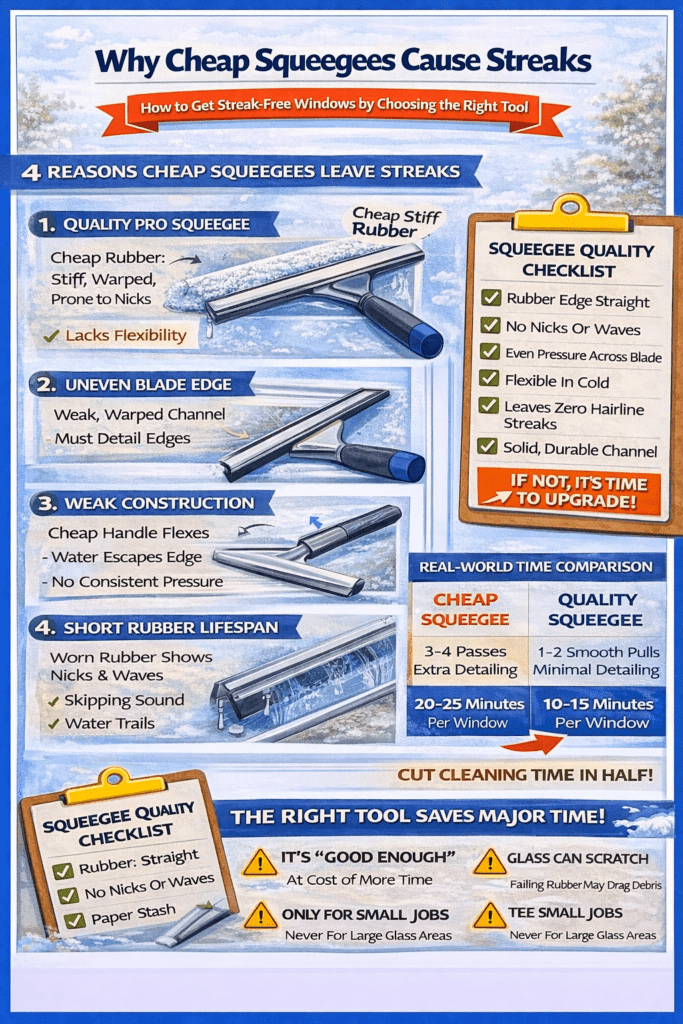
I’ve tested bargain-bin squeegees side-by-side with professional-grade models on the same window. The difference isn’t subtle. It’s obvious. Let’s break down why cheap squeegees cause streaks — and what actually matters.
What a Squeegee Is Supposed to Do
At its core, a squeegee should:
- Maintain consistent contact with the glass
- Flex evenly across the entire blade
- Remove water in one smooth pass
- Leave zero trailing lines
When it does that, you’re done in 1–2 passes – and when it doesn’t, you’re stuck detailing forever.
The 4 Reasons Cheap Squeegees Leave Streaks
1. Low-Quality Rubber
This is the biggest culprit. Cheap rubber is often:
- Too stiff
- Unevenly cut
- Poorly cured
- Prone to micro-nicks
Cold weather makes this worse. In lower temperatures, cheap rubber stiffens even more, causing skipping and chatter. Professional rubber stays flexible and consistent. If your squeegee leaves faint hairline streaks after each pull, the rubber is likely the issue.
2. Uneven Blade Edge
Many inexpensive squeegees have slightly warped channels. That means:
- One side presses harder than the other
- The center bows slightly
- Edges lift during pulls
The result? Thin water lines left behind. You wipe them with a towel… and lose the time you thought you saved by buying cheap.
3. Weak Channel and Handle Construction
Cheap handles flex. When pressure isn’t evenly distributed, water escapes around the blade.
Professional squeegees are built with:
- Solid metal channels
- Adjustable handles
- Even pressure distribution
That mechanical stability is what creates streak-free results.
4. Short Rubber Lifespan
Cheap squeegee rubber wears out fast.
Signs it’s failing:
- Fine lines after each pass
- Skipping sound
- Water trails at edges
- Needing extra pressure
And here’s the kicker: People don’t replace cheap rubber often enough — because they assume it’s “just how squeegees are.” No. That’s how bad ones are.
Here are three high-quality squeegees that consistently rate well for window cleaning performance — especially for streak-free glass:
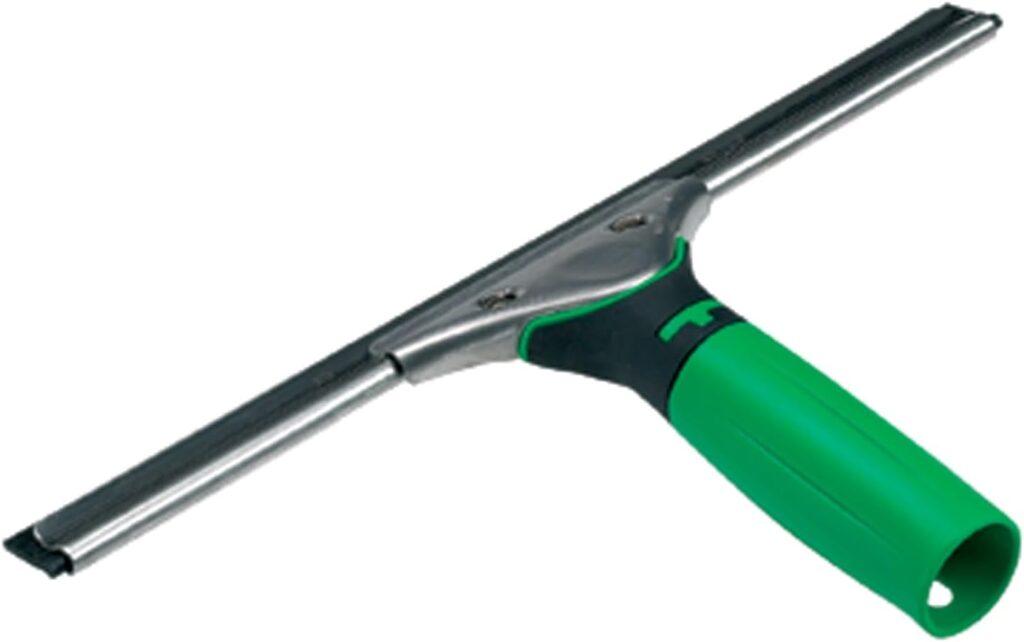
1. Unger ErgoTec Complete 10″ Squeegee
- Durable stainless channel and ergonomic handle — helps reduce fatigue during long cleaning sessions.
- Professional-grade rubber provides smooth, even contact with glass for fewer streaks.
- Compact 10″ size works well for both windows and smaller glass surfaces (mirrors, shower doors).
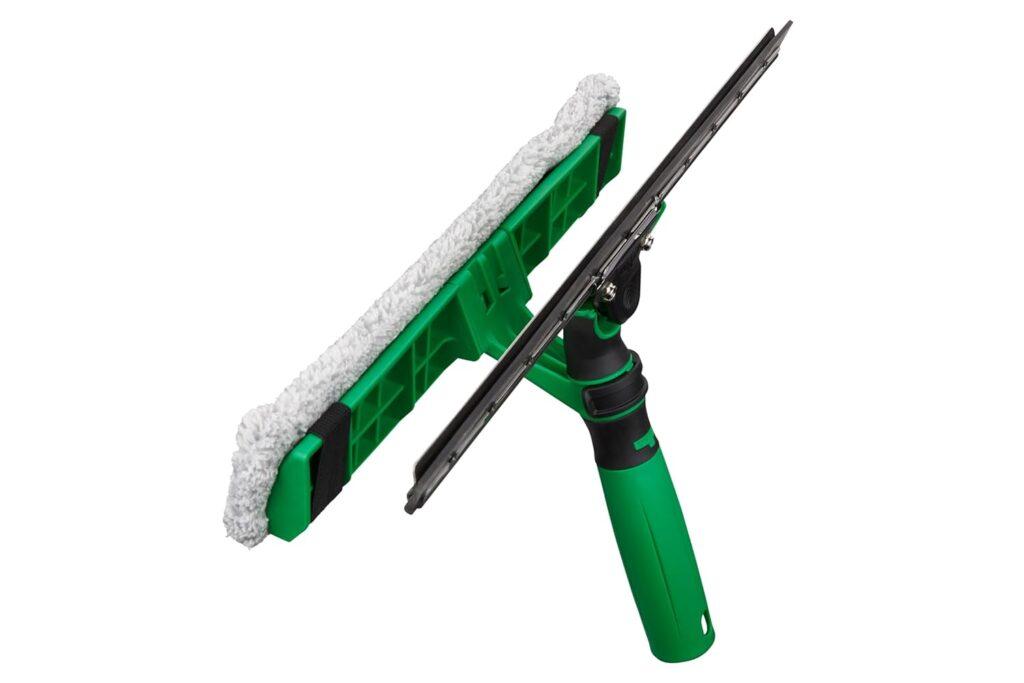
2. Unger VisaVersa Pro Squeegee
- Two-in-one tool with integrated scrubber and squeegee — spray, scrub, and remove water in fewer steps.
- Soft rubber and ergonomic grip help maintain even pressure and reduce streaking.
- Rated well by users for versatile use on windows and glass doors.
3. Carlisle Flo‑Pac Hand Held Window Squeegee
- Simple but highly effective design with sturdy rubber blade.
- Great budget-friendly option still capable of streak-free removal when paired with proper technique.
- Easy to handle and maneuver on smaller or interior windows.
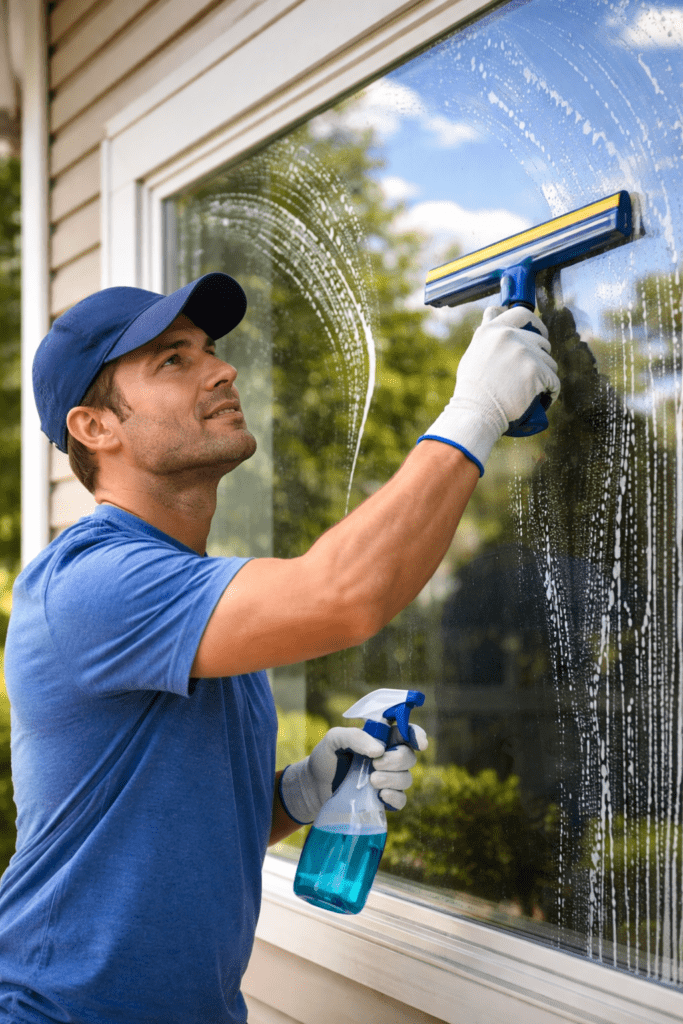
Real-World Time Comparison
Let’s compare.
Using Cheap Squeegee
- 3–4 passes per section
- Extra detailing time
- 20–25 minutes per window
Using Professional Squeegee
- 1–2 clean pulls
- Minimal detailing
- 10–15 minutes per window
Multiply that across 10 windows and the difference becomes massive. That’s the 80/20 principle in action.
Trade-Offs and Risks
“But Cheap Is Good Enough, Right?”
Sometimes — for small bathroom mirrors or occasional use.
But for:
- Sliding glass doors
- Large living room windows
- Exterior cleaning
- Cold weather work
Cheap tools cost more in time and frustration.
Risk of Scratching?
A worn cheap blade can drag debris across glass. That’s rare — but it happens. Consistent rubber contact reduces that risk.
Decision Guide: When to Upgrade
Upgrade your squeegee if you:
- See faint lines after every pass
- Detail more than you squeegee
- Replace the whole tool instead of just rubber
- Or cleaning takes longer than expected
https://www.windowcleankits.com/window-cleaning-kits/Start with a full setup outlined in the window cleaning kit guide. It simplifies the process without overbuying.
Realistic Expectations
Switching to a quality squeegee will:
- Reduce streaks
- Cut cleaning time
- Improve consistency
- Reduce detailing
It will not:
- Fix etched glass
- Remove hard water stains automatically
- Replace proper technique
But it makes good technique easier.
Printable Squeegee Quality Checklist
Copy and print this:
Squeegee Quality Checklist
☐ Rubber edge perfectly straight
☐ No visible nicks or waves
☐ Even pressure across blade
☐ Flexible in cold temperatures
☐ Leaves zero hairline streaks
☐ Channel feels solid, not flimsy
☐ Rubber replaced when streaking begins
If you can’t check these boxes, it’s time to upgrade.
Frequently Asked Questions
How Much Should a Good Squeegee Cost?
More than a grocery store model — but far less than wasted time is worth.
How Often Should Rubber Be Replaced?
When you see fine lines or skipping. Many professionals replace it monthly or sooner.
Does Brand Matter?
Quality control matters more than brand name. Look for professional-grade construction.
Can Cheap Squeegees Ever Work?
Yes — temporarily. But consistency suffers.
Why Do Streaks Appear at the Edges?
Usually uneven pressure or worn rubber.
Resources for More Information
- International Window Cleaning Association (IWCA) – https://www.iwca.org
- Glass Association of North America (GANA) – https://www.glasswebsite.com
- Occupational Safety and Health Administration (OSHA) – https://www.osha.gov
Final Thoughts
Streaks aren’t always a skill problem. Often, they’re a tool problem.
A quality squeegee:
- Maintains consistent pressure
- Flexes properly
- Removes water cleanly
- Saves serious time
Cheap tools seem like a bargain — until you calculate how long you spend correcting their flaws. Upgrade once, replace rubber regularly, and let the tool do what it’s designed to do. Clean glass shouldn’t require three passes and a prayer.