
If you’ve ever parked under a pine tree or had windows near overhanging branches, you already know the frustration of tree sap. It starts as tiny sticky dots. Then it hardens, then dirt sticks to it, and then it looks permanent.
The good news? Sap almost never permanently bonds to glass. The bad news? If you attack it the wrong way, you can scratch the window trying to remove it.
I’ve cleaned hundreds of sap-covered windows — especially in neighborhoods with pines, oaks, and eucalyptus. The trick is understanding that sap removal is more about chemistry than force. Let’s break this down.
What Makes Tree Sap So Stubborn?
Tree sap is resin-based. That means:
- It’s sticky when fresh
- Sap hardens over time
- The resin bonds stronger in heat
- It collects dust and debris
On glass, it sits on the surface. On vinyl frames, it can stain if left too long. Your job is to soften it first — not scrape it aggressively.
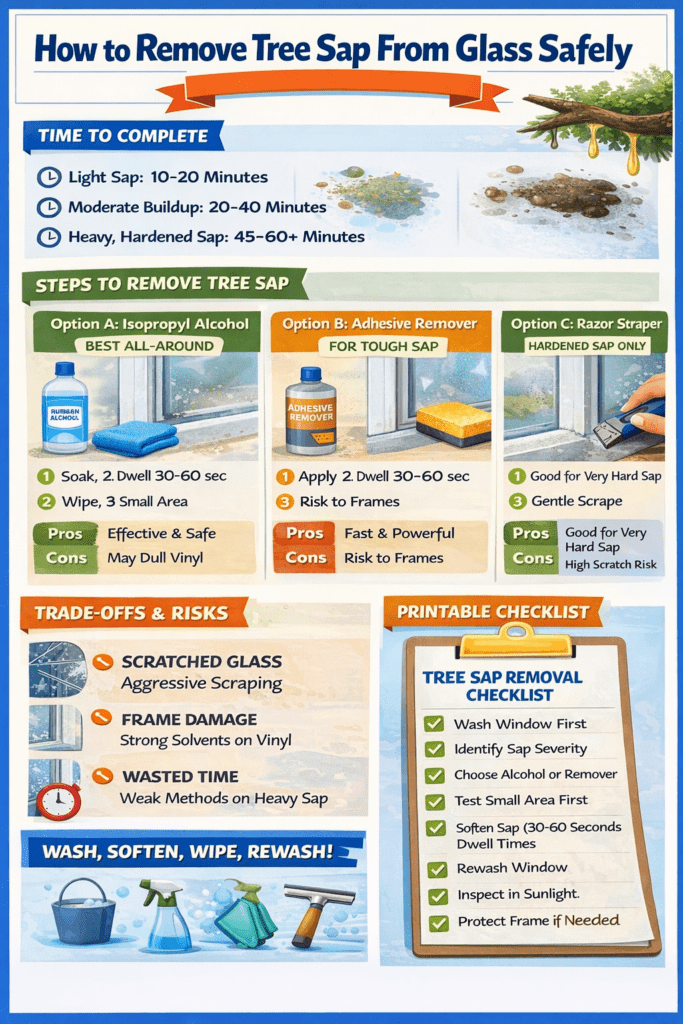
Time to Complete
- Light sap (fresh spots): 10–20 minutes per window
- Moderate buildup: 20–40 minutes per window
- Heavy baked-on sap: 45–60+ minutes per window
Exterior windows in full sun take longer.
Step 1: Start With a Proper Wash (Always)
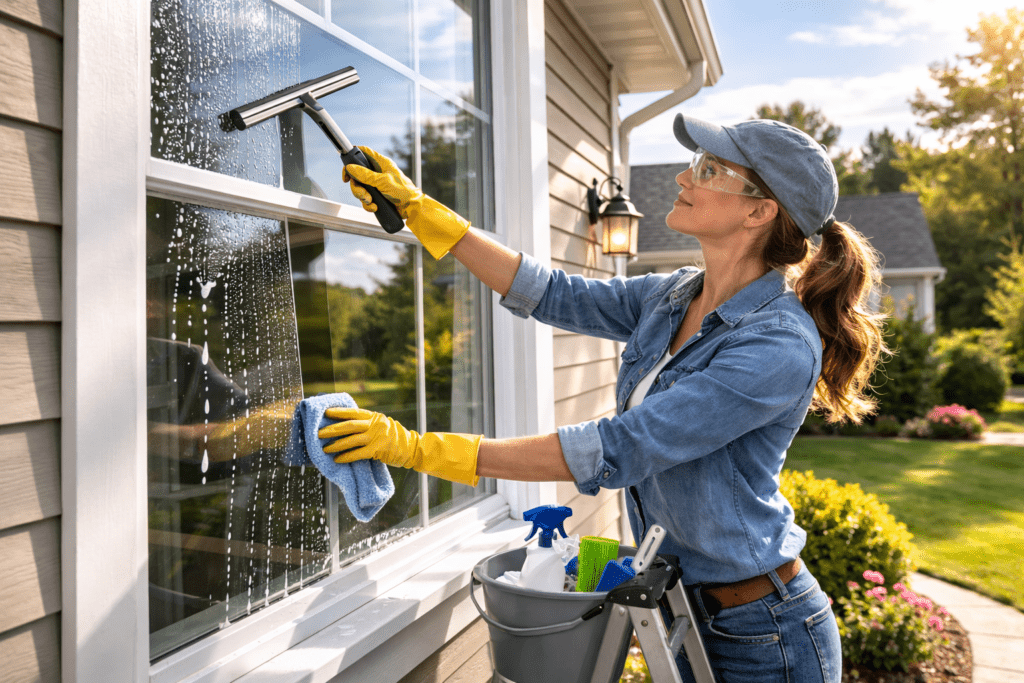
Before spot-treating sap, wash the glass normally.
Use:
- Bucket with warm water + dish soap
- Quality scrubber
- Squeegee
If you don’t already have the right setup, a complete window cleaning kit saves a lot of frustration. Washing first removes dirt that could scratch when you treat sap later.
Step 2: Choose the Right Removal Method
This is where decision-making matters.
Option A: Isopropyl Alcohol (Best All-Around Choice)
Best for: Light to moderate sap.
How:
- Apply rubbing alcohol to microfiber cloth.
- Press onto sap spot for 30–60 seconds.
- Gently wipe.
- Rewash area.
Pros:
- Effective
- Safe for glass
- Inexpensive
Cons:
- May dull certain vinyl finishes if not rinsed
Option B: Commercial Adhesive Remover
Best for: Older, hardened sap.
Apply sparingly with a cloth, not directly onto window. Always rinse thoroughly afterward.
Trade-off: Stronger chemicals = faster results but higher risk on frames.
Option C: Razor Scraper (Use Carefully)
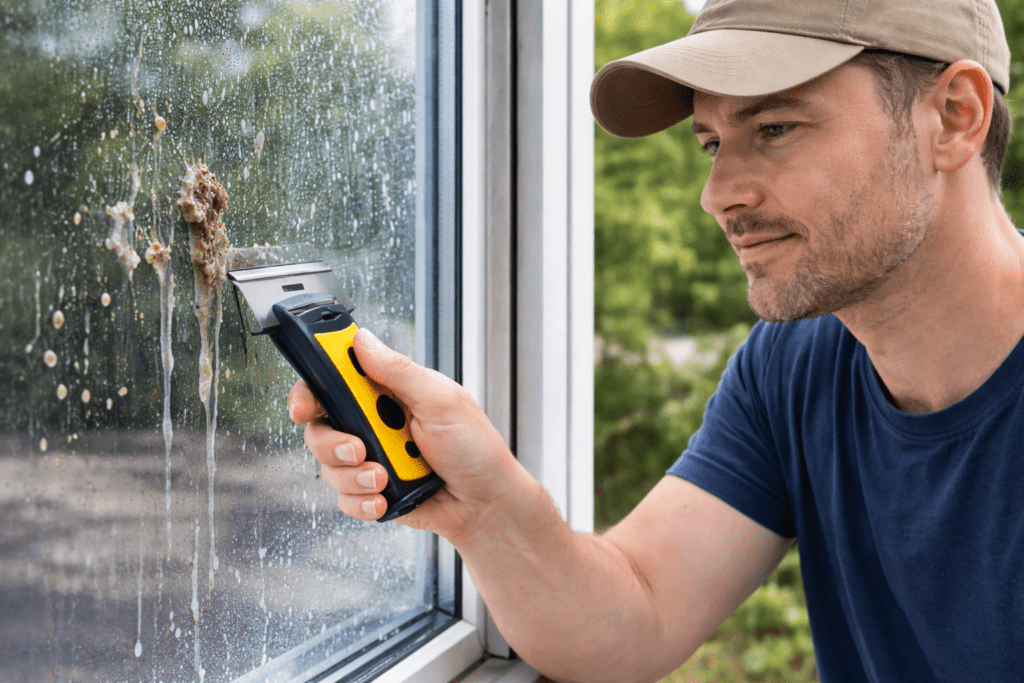
For very hardened sap, mechanical removal may be needed.
Important:
- Glass must be wet
- Blade must be new
- Light pressure only
If you’re not comfortable with blade technique, review proper methods in our article on razor scrapers for windows. Scrapers work — but they’re not beginner tools.
What NOT to Do
- ❌ Don’t scrape dry glass
- ❌ Don’t use metal tools other than proper scraper
- ❌ Don’t use steel wool on tinted glass
- ❌ Don’t use acetone on vinyl frames
- ❌ Don’t power wash sap
Force causes scratches. Softening removes sap safely.

Printable Checklist
You can copy and print this:
Tree Sap Removal Checklist
☐ Wash window first
☐ Identify sap severity
☐ Choose alcohol or remover
☐ Test small area first
☐ Soften sap (30–60 seconds dwell time)
☐ Wipe gently
☐ Rewash window
☐ Inspect in sunlight
☐ Protect frame if needed
Realistic Expectations
Let’s be honest. Fresh sap? Easy. Sap that’s been baking in summer heat for months? Slower.
You may need:
- Multiple applications
- Gentle scraping
- Patience
Also, sap can leave slight staining on vinyl frames if left too long. That’s cosmetic — not structural.
If you’re also fighting mineral buildup from sprinklers, you may need a separate approach like the one outlined in our guide on removing hard water stains from windows.
Different problem. Different solution.
Protecting Glass After Sap Removal
After removal:
- Clean thoroughly
- Consider applying a rain-repellent glass treatment
- Trim overhanging branches if possible
Prevention saves hours later. Sap removal is easier on properly maintained glass.
Trade-Offs and Risks
Risk #1: Scratching Glass
Too much pressure with scraper = permanent damage.
Risk #2: Frame Damage
Strong solvents can dull vinyl or remove paint on aluminum.
Risk #3: Wasted Time
Using weak methods on heavy sap leads to frustration.
The smart move? Start mild. Escalate only if needed.
Frequently Asked Questions
Does Tree Sap Permanently Damage Glass?
Almost never. It sits on the surface. The risk comes from improper removal.
Can I Use Vinegar?
Vinegar helps with mineral stains but isn’t very effective on resin-based sap.
Is WD-40 Safe?
It can loosen sap but leaves residue and may stain frames. Not my first choice.
Can Sap Stain Vinyl Frames?
Yes, if left long-term in heat. Removal is possible but may not fully restore color.
What About Car Windshields?
Same process applies — alcohol works well. Avoid scraping unless you know what you’re doing. Also see these time-saving windshield cleaning kits.
Reputable Resources for More Information
- International Window Cleaning Association (IWCA) – https://www.iwca.org
- Glass Association of North America (GANA) – https://www.glasswebsite.com
- Occupational Safety and Health Administration (OSHA) – https://www.osha.gov
Final Thoughts
Tree sap looks intimidating. It isn’t. The key is patience and proper technique:
- Wash first
- Soften before wiping
- Avoid aggressive scraping
- Rinse thoroughly
Most sap removal jobs are about 70% preparation and 30% action. Don’t rush it. Handled correctly, you’ll restore clear glass without scratches, haze, or damaged frames — and without turning a simple cleanup into an expensive mistake.