
Let’s be honest. Most of us don’t get to choose the “perfect cloudy day” to clean windows. You wake up motivated, the sky is clear, and the sun is blasting the side of your house you planned to clean. Now what?
I’ve cleaned windows in brutal summer heat, full sun exposure, and reflective glass that felt like it was fighting back. It’s absolutely possible to get streak-free results in direct sunlight — but your approach has to change.
If you try to clean sunny glass the same way you clean shaded glass, you’ll end up frustrated. Let’s break this down.
Why Direct Sunlight Is a Problem
The issue isn’t the sun itself — it’s evaporation.
When sunlight hits the glass:
- Water evaporates faster
- Soap dries before you squeegee
- Residue bakes onto the surface
- Streaks become more visible
You’re basically racing against drying time. The solution isn’t to rush. It’s to adjust your technique.
Step 1: Use the Right Tools (This Matters More in Sun)
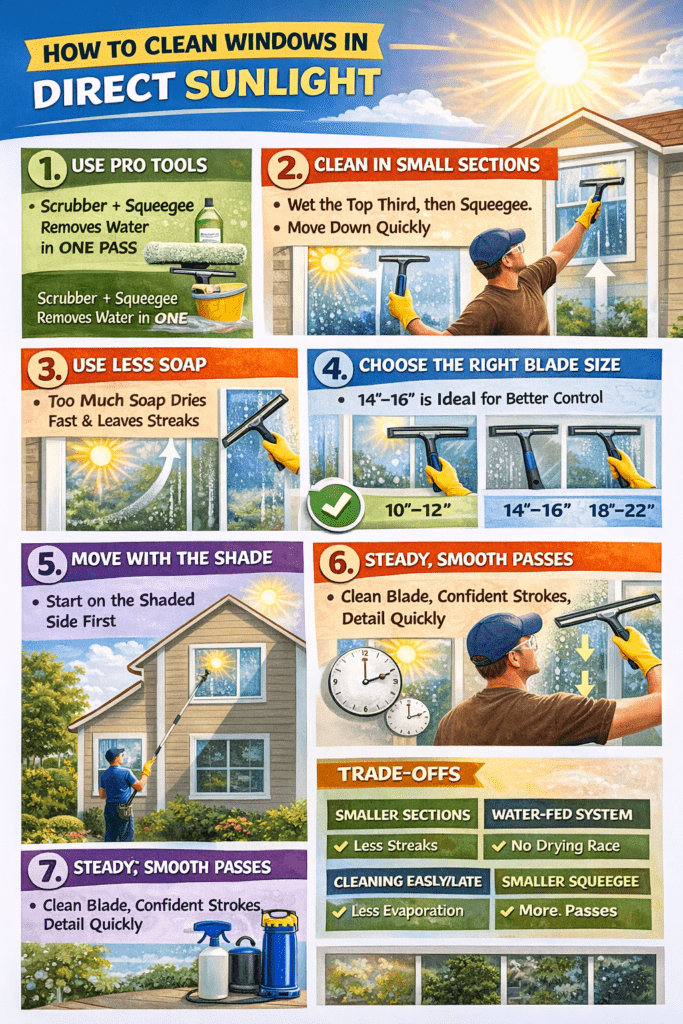
Sunlight exposes mistakes instantly. If you’re still using spray bottles and paper towels, you’ll see every streak. Switch to a professional scrubber + squeegee system. It removes water in one controlled pass instead of spreading it around.
If you need to upgrade your setup, see recommended window cleaning kits here. The right tools buy you precious seconds before evaporation sets in.
Step 2: Work in Smaller Sections
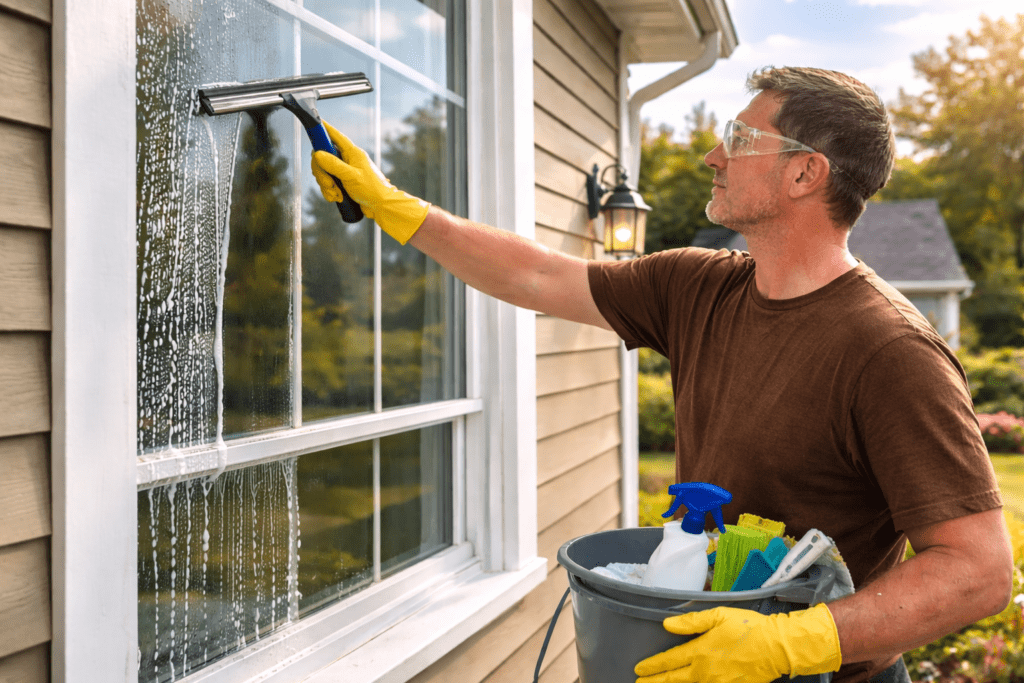
In direct sun, don’t soak the entire window.
Instead:
- Wet only the top third.
- Squeegee immediately.
- Move down in sections.
This prevents soap from drying before you remove it. It feels slower at first — but it actually saves time because you’re not fixing streaks afterward.
Step 3: Use Less Soap
This is counterintuitive. Many people think more soap = better cleaning. In sunlight, too much soap causes residue that dries quickly and streaks.
Use:
- A small amount of dish soap
- Just enough to lubricate the scrubber
- Not a foamy bucket
Thin solution = easier glide + faster removal.
Step 4: Choose the Right Squeegee Size
In sunny conditions, control matters more than speed. If your blade is too large and you can’t maintain even pressure, you’ll leave streak edges that are immediately visible in sunlight.
For most residential windows, 14″–16″ works best.
If you’re unsure which size gives you the best control, this squeegee guide breaks it down. Smaller blades can actually perform better in tough conditions.
Step 5: Move Confidently — But Not Frantically
Sunlight tempts you to rush. That’s when technique falls apart.
Instead:
- Apply steady pressure
- Use smooth top-to-bottom passes
- Wipe your blade after every stroke
- Detail edges quickly with microfiber
A clean blade is critical in sunny conditions. If you hesitate mid-pass, you’ll see drying lines.
Step 6: Work With the Sun, Not Against It
Even on sunny days, the sun moves. Start on the shaded side of the house first. Then move with the shade line as the sun shifts.
Sometimes simply waiting 30–60 minutes changes the entire difficulty level.
If you’re cleaning upper-level windows in full sun, be mindful of safety too. Glare can reduce visibility and heat increases fatigue. If you need guidance on safe upper-level cleaning, check out these tips. Heat and ladders are not a great combination.
Step 7: Consider a Water-Fed Pole System (Exterior Only)
If you regularly deal with sun-exposed windows, a water-fed pole system can help.
These systems:
- Use purified water
- Eliminate soap
- Air dry spot-free
No squeegee needed.
Trade-off:
Higher upfront cost — but major time savings for exterior work. For large sunny homes, it’s often worth it.
The Trade-Offs You Should Understand
| Method | Pros | Cons |
|---|---|---|
| Smaller sections | Less streaking | Slightly slower |
| Smaller squeegee | Better control | More passes |
| Water-fed system | No drying race | Higher cost |
| Cleaning early/late | Easier results | Scheduling needed |
Sometimes the smartest move is simply adjusting timing. But if timing isn’t flexible, technique becomes everything.
Realistic Expectations
Can you get perfect, flawless results in blazing sun? Yes — but it takes practice.
You may notice:
- Slight edge detailing more visible in sunlight
- Tiny imperfections only visible at certain angles
From normal viewing distance, windows will look excellent. Don’t obsess over microscopic streaks only visible when standing inches away. Efficiency and consistency matter more than perfection under a magnifying glass.
Frequently Asked Questions
Is it bad to clean windows in direct sunlight?
It’s not harmful to the glass, but it increases streak risk due to fast evaporation.
What time of day is best?
Early morning or late afternoon is ideal. Midday sun is the hardest.
Why do streaks show more in sunlight?
Bright light reflects off residue and uneven drying lines, making flaws more visible.
Should I use cold or warm water?
Cool or lukewarm water works best. Hot water evaporates even faster in direct sun.
Can I use vinegar instead of soap?
You can, but in direct sun it still evaporates quickly. Proper squeegee technique matters more than the solution.
Reputable Resources for More Information
- International Window Cleaning Association (IWCA)
https://www.iwca.org/ - Occupational Safety and Health Administration (OSHA) – Ladder Safety
https://www.osha.gov/ladder-safety - Consumer Product Safety Commission (CPSC)
https://www.cpsc.gov/
Final Thoughts
Cleaning windows in direct sunlight isn’t ideal — but it’s manageable.
The key adjustments:
- Use professional tools
- Work in smaller sections
- Use less soap
- Maintain blade control
- Move with the shade when possible
Sunlight exposes sloppy technique — but it also rewards good technique. Once you learn how to manage evaporation instead of fighting it, sunny-day cleaning becomes just another job done right. And when the glass looks clear even in full sun? That’s when you know you’ve dialed it in.