
Cleaning second-story windows is one of those jobs that separates the confident DIYers from the people who say, “I’ll just wait until next year.”
I’ve cleaned hundreds of upper-level windows on everything from suburban two-stories to tall entryway glass above staircases. The biggest mistake homeowners make isn’t using the wrong soap — it’s underestimating the risk.
If you’re going to do this yourself, you need a strategy. The goal isn’t just clean glass. It’s clean glass without injury. Let’s walk through it the smart way.
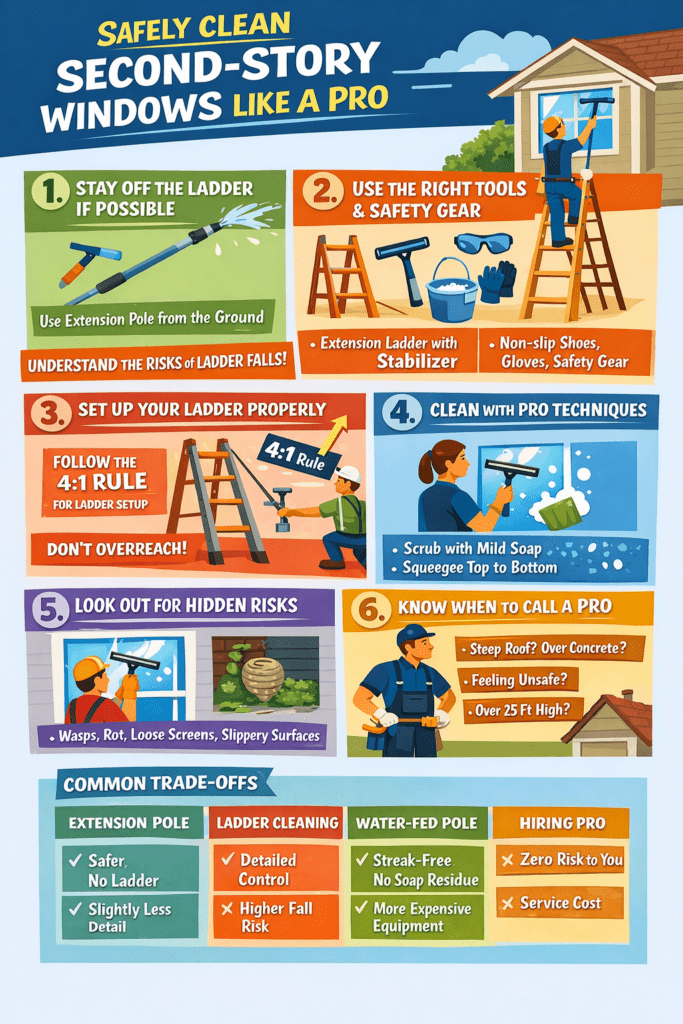
Step 1: Decide If You Can Stay Off the Ladder
Before you even drag a ladder out of the garage, ask yourself:
- Can I reach the window with an extension pole?
- Can I remove and clean from inside?
- Is the ground level and stable?
- Do I feel steady working at height?
If you can stay on the ground, do it. Every time.
A high-quality extension pole system lets you scrub and squeegee safely from below. Many homeowners are surprised how effective this is once they learn proper technique.
If you don’t already have the right tools, start with a professional-grade kit like those discussed in our guide to complete window cleaning systems here.
Trade-off:
- Ground cleaning = safer
- Ladder cleaning = more precision
For most homes, the slight loss of detail from ground-level work is worth the safety gain.
Step 2: Use the Right Equipment (Not Household Shortcuts)
Here’s what you actually need:
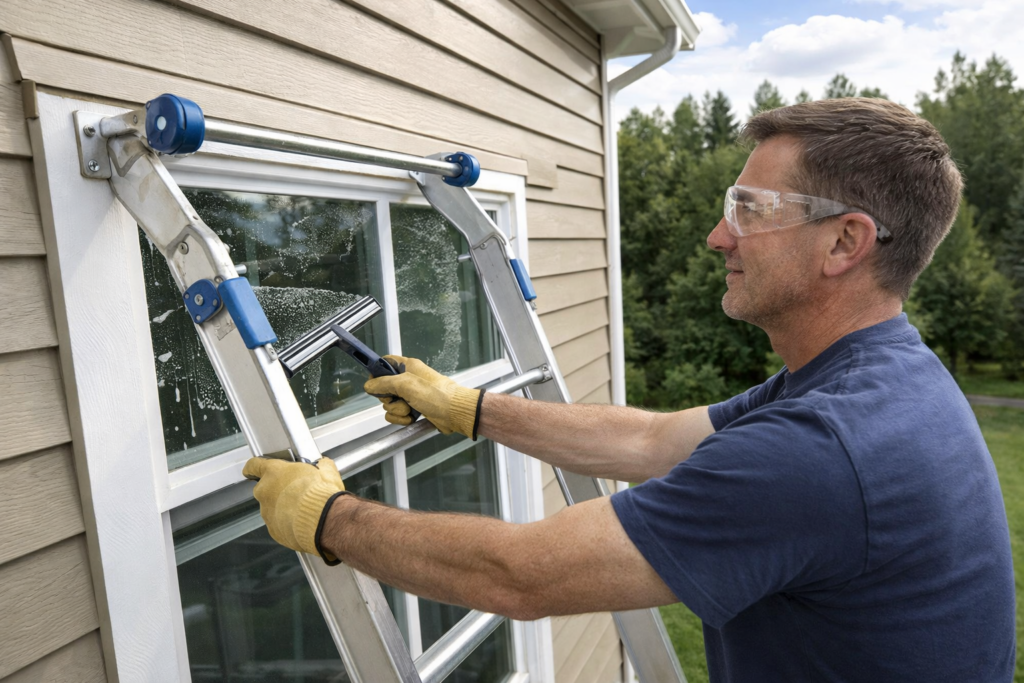
Safety Gear
- Extension ladder (rated properly)
- Ladder stabilizer or stand-off
- Non-slip shoes
- Gloves
- Eye protection
Cleaning Tools
- Professional squeegee
- Microfiber scrubber
- Bucket with mild dish soap
- Extension pole (20–30 ft if needed)
- Microfiber detailing cloths
Do not:
- Spray glass cleaner and wipe with paper towels from a ladder
- Use a pressure washer (you can force water into seals)
- Lean sideways to reach “just one more corner”
If you’re unsure what size tools are appropriate, our breakdown on choosing the right squeegee size here can help. Using professional tools isn’t about being fancy. It’s about control and efficiency.
Step 3: Ladder Setup Done Properly
If you must use a ladder, this is where you slow down.
Follow the 4:1 rule:
For every 4 feet of height, place the base 1 foot away from the wall.
Make sure:
- The ground is firm and level
- The ladder extends at least 3 feet above roof edge if stepping onto roof
- You maintain three points of contact
- You never overreach
Overreaching is how most falls happen. If your belt buckle moves outside the ladder rails, reposition. It’s annoying to move the ladder repeatedly. It’s worse to fall.
Step 4: Proper Cleaning Technique (To Avoid Doing It Twice)
Here’s the simple pro method:
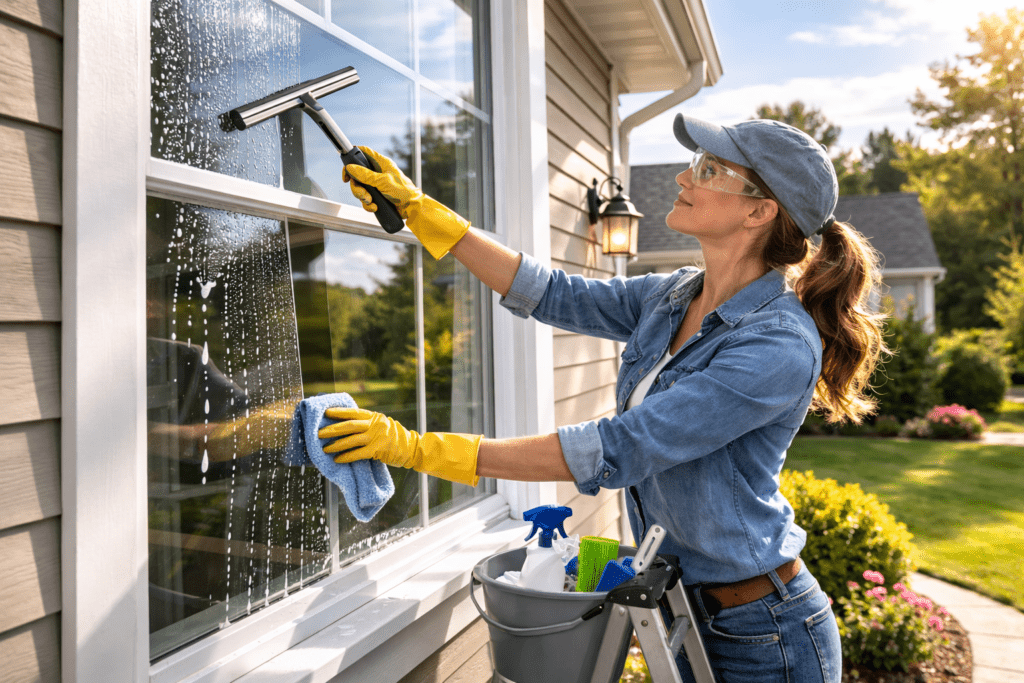
- Wet the glass thoroughly with scrubber.
- Use a top-to-bottom squeegee motion.
- Wipe the blade after every pass.
- Detail edges with microfiber.
If you’re working from the ground with a pole:
- Use controlled, slow strokes
- Keep pressure consistent
- Work in smaller sections
Realistic expectations:
When cleaning from the ground, minor edge detailing may not be perfect from 6 inches away. From normal viewing distance? It’ll look great. Most homeowners over-clean trying to chase microscopic streaks only visible in direct sunlight.
Step 5: Watch for Hidden Risks
Second-story windows often come with extra complications:
- Wasp nests
- Loose screens
- Rotting trim
- Slippery siding
- Direct sunlight causing rapid drying
Clean early morning or late afternoon whenever possible. Midday sun causes streaking and makes the glass dry before you can squeegee properly.
Also check weather. Wind makes pole work difficult and ladder work dangerous.
Step 6: Know When to Hire a Professional
There’s no prize for doing everything yourself.
Call a pro if:
- Windows are above concrete or stone surfaces
- The roof pitch is steep
- You feel uneasy on ladders
- Windows exceed 25–30 feet high
- You have balance or mobility concerns
Professional window cleaners cost far less than a hospital visit. Be honest about your comfort level. That’s not weakness — that’s wisdom.
Common Trade-Offs to Consider
| Option | Pros | Cons |
|---|---|---|
| Extension Pole | Safer, no ladder risk | Slightly less precision |
| Ladder Cleaning | Detailed control | Higher fall risk |
| Water-Fed Pole | Streak-free rinse, no soap residue | Higher equipment cost |
| Hiring Pro | Zero risk to you | Service cost |
If this is something you’ll do twice a year long-term, investing in proper tools makes sense. On the other hand, if this is a one-time deep clean on a tall home, hiring out might be smarter.
Frequently Asked Questions
Is it safe to clean second-story windows without a ladder?
Yes, with the right extension pole system, you can clean most two-story windows safely from the ground.
How tall of an extension pole do I need?
For most two-story homes, 20–30 feet is sufficient. Carbon fiber poles are lighter and easier to control than aluminum.
Can I use a pressure washer?
No, pressure washers can damage window seals, force water inside walls, and ruin screens.
How often should second-story windows be cleaned?
Twice per year is typical. More often if you live near trees, dust, construction, or coastal areas.
What is the biggest safety mistake?
Overreaching on a ladder. The second biggest is working alone without someone nearby.
Reputable Resources for More Information
- CDC – Ladder Safety
https://www.cdc.gov/niosh/topics/falls/ - OSHA – Portable Ladder Safety
https://www.osha.gov/ladder-safety - Consumer Product Safety Commission – Ladder Safety Tips
https://www.cpsc.gov/Safety-Education/Safety-Guides/Home/Ladder-Safety
Final Thoughts
Cleaning second-story windows safely isn’t about bravery. It’s about preparation.
- If you can stay on the ground — do it.
- If you need a ladder — set it correctly.
- And if you’re unsure — hire help.
Clean windows are great. Clear views are satisfying. But your safety matters more than spotless glass. Slow down. Use proper equipment. Respect the height.
And enjoy the view — without the risk.