
There’s nothing more frustrating than stepping back after cleaning your windows… only to see streaks once the glass dries.
I’ve cleaned thousands of panes in every condition imaginable—direct sun, coastal fog, pollen season, hard water country—and here’s the truth: streaks usually show up after drying because something in your process went slightly wrong.
The good news? You don’t need to start over. You just need to fix the right thing. Let’s walk through how to correct dried streaks quickly, what caused them, and how to prevent them next time.
First: What Causes Streaks After Windows Dry?
Streaks almost always come from one of five sources:
- Too much cleaning solution
- Dirty or overloaded towels
- Hard water residue
- Washing in direct sunlight
- Improper squeegee technique
If you’re seeing cloudy lines, haze, or drag marks, don’t panic. The fix depends on what type of streak you’re looking at.
Step-by-Step: How to Fix Dried Streaks
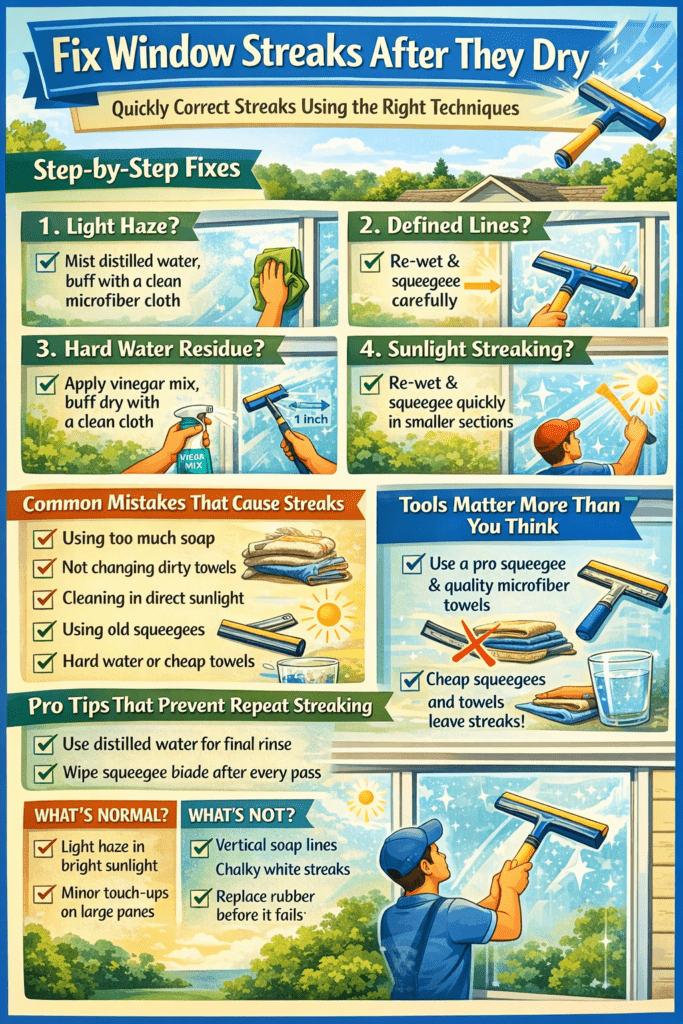
1. Light Haze or Film? Use a Damp Microfiber Reset
If the glass looks cloudy but not heavily marked:
- Lightly mist the window with clean distilled water (not more cleaner).
- Use a clean, dry microfiber cloth.
- Buff in tight circular motions.
- Follow with a dry side of the cloth to polish.
The key here is minimal moisture. Most streaks happen because too much product dried unevenly.
If you’re unsure about cloth quality, review the microfiber options in the tool guides—good microfiber makes a measurable difference.
2. Defined Lines or Squeegee Marks?
This usually means:
- The blade was dirty.
- You didn’t wipe the blade between passes.
- You didn’t overlap strokes properly.
Here’s the fix:
- Lightly re-wet just the streaked area.
- Use a clean squeegee with a sharp rubber edge.
- Overlap strokes by about 1 inch.
- Wipe the blade with a clean towel after every pass.
If your squeegee leaves drag lines repeatedly, it may be time to upgrade. The professional squeegee recommendations explain blade hardness and when to replace rubber.
3. Hard Water Streaks?
If the streaks look chalky or mineral-like, that’s not soap. That’s mineral residue.
In that case:
- Use distilled water mixed with a small amount of white vinegar.
- Apply gently with a microfiber applicator.
- Let it dwell for 1–2 minutes.
- Buff dry with a clean cloth.
For heavier buildup, you may need specialty products. The hard water removal guides walk through safe options. Trade-off warning: abrasive scrubbing pads can scratch glass if used improperly. Always test first.
4. Sunlight Streaking?
If you washed in direct sunlight, the cleaner likely dried before you finished wiping.
Fix:
- Work in smaller sections.
- Lightly re-wet.
- Immediately squeegee and dry edges.
Realistic expectation: You can clean in sunlight—but you must move faster and use less solution.
There’s a detailed breakdown of that technique here:
https://www.windowcleankits.com/how-to-clean-windows-in-direct-sun/
When You Should Start Over
Sometimes streaks indicate that the window is still dirty—not just streaked.
If you see:
- Oily smears
- Greasy fingerprints that reappear
- Pollen film
It may be faster to:
- Rewash properly.
- Use a professional applicator.
- Use distilled water.
- Finish with a quality squeegee.
Trying to “spot fix” heavy contamination can waste more time than doing it right once.
Tools Matter More Than You Think
Here’s something most homeowners underestimate: towels and rubber quality determine your outcome more than your cleaner.
If you’re using:
- Old bath towels
- Paper towels
- Cheap store-bought squeegees
You are fighting your equipment.
A basic professional kit (like the starter sets reviewed here) eliminates 90% of streak problems immediately. It’s not about spending more. It’s about using the right tools.
Common Mistakes That Create Dried Streaks
Let me be direct here—these are the big ones:
- Using too much soap
- Not changing out dirty towels
- Skipping edge detailing
- Cleaning when glass is hot
- Using tap water in high mineral areas
If you live in a hard water area, distilled water alone can transform your results.
Realistic Expectations
Even professionals occasionally see faint lines in certain lighting.
Here’s what’s normal:
- Slight visibility at extreme angles in direct sun.
- Micro-haze on first pass if windows were very dirty.
- Minor touch-ups required on large panes.
What’s not normal:
- Visible vertical soap lines.
- White chalky streaks.
- Drag marks across the entire pane.
If you’re seeing those regularly, it’s a process issue—not bad luck.
Frequently Asked Questions
Why do my windows look fine wet but streaky when dry?
Because residue only becomes visible once moisture evaporates. Soap, minerals, or dirt film remain behind.
Should I use more cleaner to remove streaks?
No, more product usually makes it worse. Use less solution and better drying technique.
Can I fix streaks without rewashing the whole window?
Yes—if they’re light haze or squeegee lines. Heavy buildup usually requires re-cleaning.
Is newspaper still a good option?
Not really. Modern inks smear and paper fibers leave lint. Microfiber is more reliable.
How often should I replace squeegee rubber?
If you clean regularly, every 3–6 months. If you see drag lines consistently, replace it immediately.
Pro Tips That Prevent Repeat Streaking
- Use distilled water for final rinse.
- Wipe squeegee blade after every stroke.
- Keep a separate towel for edges only.
- Wash microfiber separately from cotton laundry.
- Replace rubber before it fails.
Reputable Resources for More Information
- International Window Cleaning Association (IWCA): https://www.iwca.org
- Glass Association of North America (GANA): https://www.glasswebsite.com
- U.S. Environmental Protection Agency (EPA) – Safer Cleaning Products: https://www.epa.gov/saferchoice
Final Thoughts
If your windows streak after drying, don’t get discouraged. That’s a technique adjustment, not a failure. Most streak problems come down to three things:
- Too much product.
- Dirty tools.
- Water quality.
Fix those, and your results improve dramatically.
Window cleaning isn’t about scrubbing harder—it’s about removing residue cleanly and drying efficiently. Once you dial that in, streaks stop being a recurring headache and start being a quick, easy fix.